
Every Extruder Heard. Every Bearing Greased. The Melt Stream Keeps Running.
Continuous Condition Monitoring for the Assets That Stop an Extrusion Line.

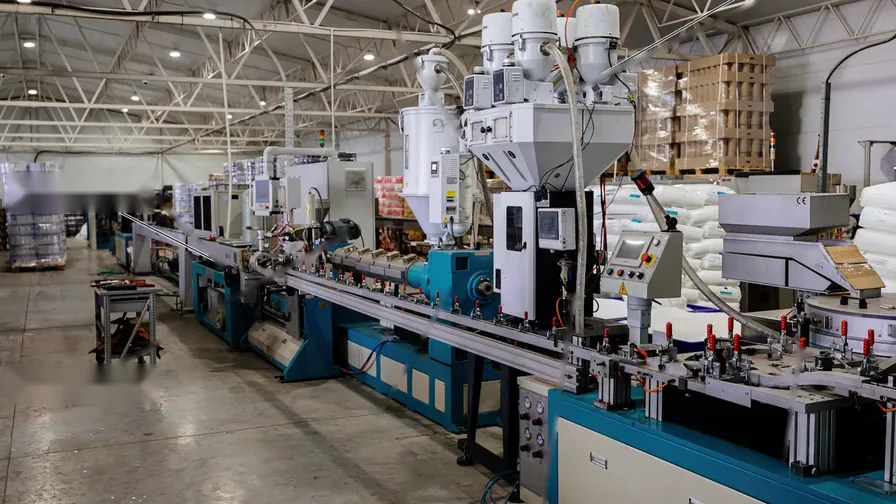
Predictive Maintenance for Plastics Plants
Every gearbox, barrel zone and drive — monitored in real time.
Continuous Condition Monitoring for the Assets That Stop an Extrusion Line.
Predictive maintenance for plastics plants is the continuous condition monitoring of the equipment that keeps the melt stream running — extruder gearboxes and drive motors, barrel heater zones, dryers, loaders, cutters and plant utilities — so a developing fault is corrected on a planned schedule instead of scrapping the run. Coverage spans haul-off drives, blender dosing drives, screen changer and melt pump drives, calibration tank pumps, and the compressors, pumps and fans of chillers, air and vacuum systems, cooling towers and granulators, combining ultrasound, vibration, temperature and electrical monitoring with validated analysis and autonomous lubrication.
An extrusion line is one continuous process: unplanned downtime from a failing gearbox bearing or a drifting barrel zone stops the melt and turns everything in the die into scrap. Extruder motor bearing failures are documented at $24,000 per bearing and up to $36,000 per motor rewind. On five A-critical extruder motors, the closed-loop reliability ecosystem's ultrasound-driven autonomous lubrication cut bearing friction from about 57 dB to about 50 dB, eliminated lubrication-related failures and avoided $120,000–$180,000.
UltraVibe™ captures ultrasound, HFE, vibration and temperature at every critical bearing. MatrixHub™ learns each asset's baseline and ranks every deviation by production risk. Industrial Matrix reliability experts validate each finding before it reaches your work queue, and AI LubeMatrix™ performs online condition-based lubrication — ultrasonic greasing — on hot, high-load extruder bearings that time-based routes under- or over-grease. From the first ultrasonic signal to verified corrective action, the loop closes inside your plant.
Precision at the Core
01
Dryers, loaders, extruder and downstream tooling run as one continuous process. When a gearbox bearing or drive motor fails, the melt stops and everything in the barrel and die becomes scrap and purge.
02
Extruder gearboxes and motor bearings run hot, loaded and continuous. Time-based greasing under-lubricates some bearings and over-greases others, damaging seals — and neither shows until friction climbs.
03
A failed heater band or drifting barrel zone changes melt temperature long before anyone sees it in the product. Non-contact infrared probes profile every zone so drift is caught before scrap is made.
04
A mid-run stop turns everything in the barrel into purge and scrap. Every validated finding becomes a prioritized work order, reviewed in our biweekly Customer Success meeting and scheduled into your next product changeover or planned stop.
$120K–$180K
avoided on five A-critical extruder motors with autonomous lubrication
57 → 50 dB
bearing friction after ultrasound-driven lubrication replaced time-based greasing
0
lubrication-related failures across all five motors after deployment
Failure Mode | Signature We Detect | Consequence If Missed |
|---|---|---|
Extruder motor bearing under-lubrication | Rising ultrasonic friction signature — at the earliest stage, before vibration or temperature changes | Bearing failure at $24,000, up to $36,000 more for a motor rewind, and a stopped line |
Extruder gearbox gear-mesh wear and thrust bearing failure | Gear-mesh sidebands and rising HFE energy on the reduction gears and thrust bearing | Long-lead gearbox repair, extended outage, purge and scrap |
Barrel heater zone drift and failed heater bands | Non-contact infrared (IR) zone profiling of every barrel zone and the die | Melt-temperature deviation, off-spec product, wasted resin |
Screen changer and melt pump bearing wear | HFE bearing-defect frequencies and pressure-related vibration changes | Melt flow disruption, unplanned screen or pump change |
Hopper dryer blower imbalance and bearing fatigue | Elevated vibration at running speed and temperature drift | Wet resin reaches the extruder — splay, voids and rejects |
Material loader and blender drive wear | Ultrasound on vacuum conveying for leaks, HFE and vibration on dosing gearmotors | Starved or mis-dosed feed, colour and recipe drift |
Haul-off and cutter drive faults | Belt-slip and gearbox signatures, blade imbalance and impact wear (HFE, kurtosis) | Dimension variation, poor cuts, line stop |
Calibration tank pump cavitation and seal wear | Vibration and temperature trends on vacuum and coolant pumps | Loss of sizing vacuum or cooling, profile out of tolerance |
Chiller compressor, air compressor and vacuum pump faults | Vibration, temperature and current drift (PULSE Series™) on utility drives | Lost process cooling or air — several lines stop at once |
Sense → Analyze → Validate → Act
01
UltraVibe™ 4-in-1 sensors on extruder gearboxes, drive motors and line-critical drives capture ultrasound, HFE, vibration and temperature at the bearing — through heat, load and continuous duty.
02
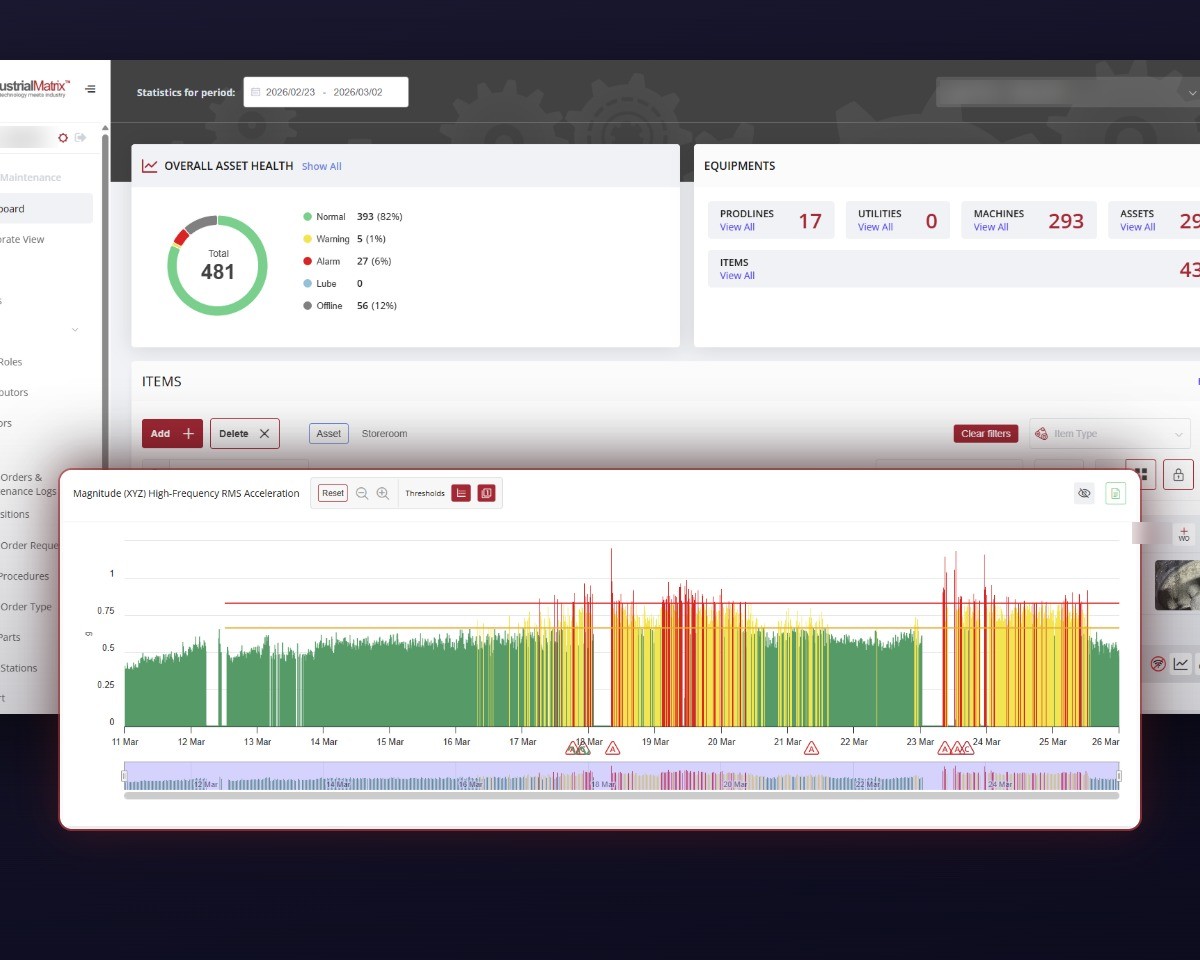
MatrixHub™ learns each asset's normal operating signature and ranks every deviation by what it would stop — the extruder gearbox above the utility fan.
03
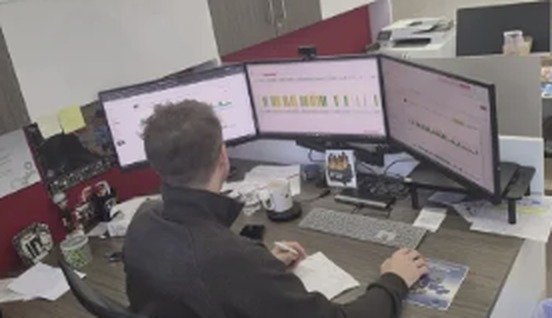
Our Customer Success team validates every flagged anomaly before it reaches you, so only confirmed findings reach your work queue.
04
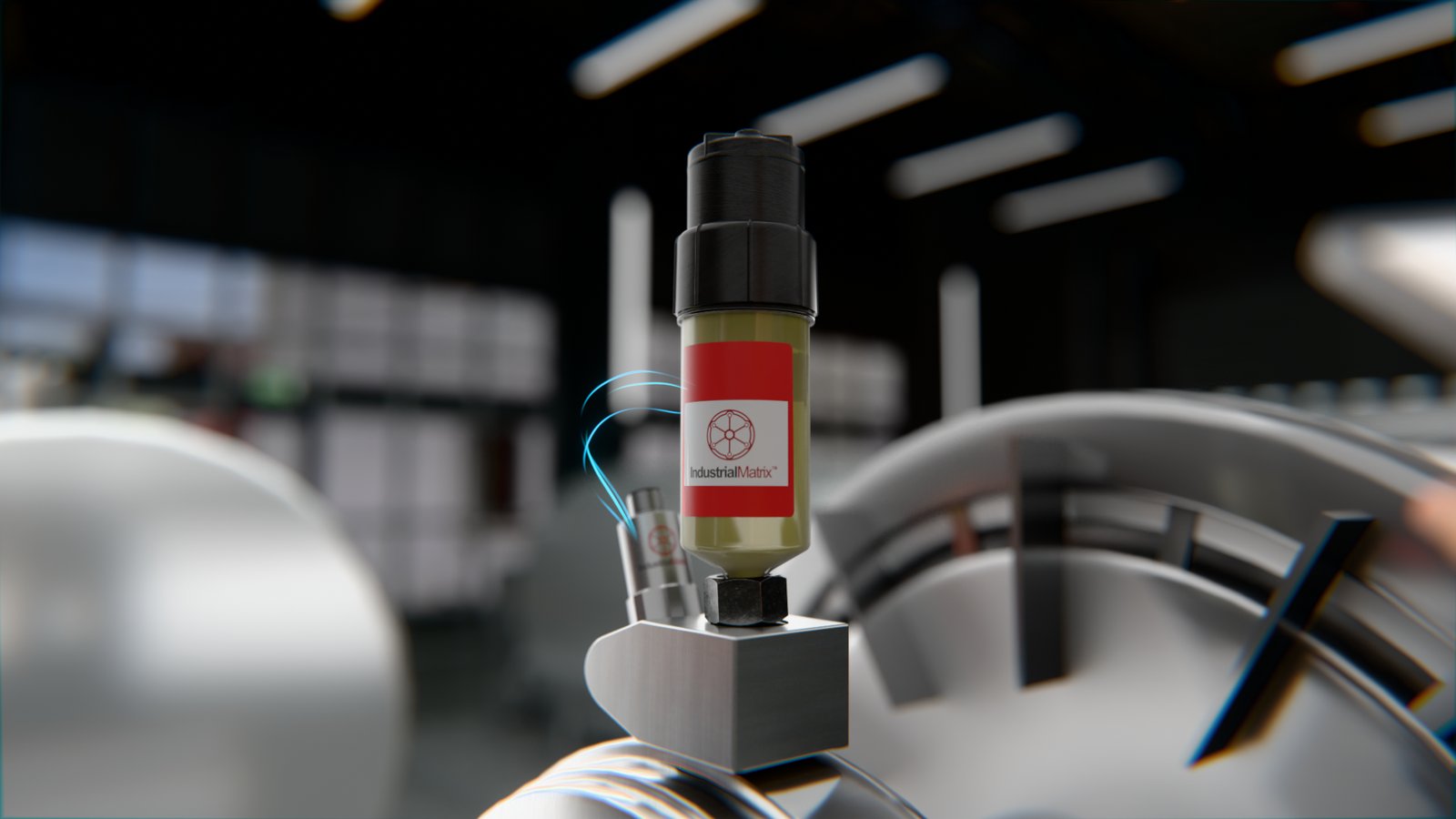
Lubrication faults are corrected autonomously by AI LubeMatrix™ on live ultrasound. Every other confirmed fault becomes a prioritized work order, reviewed in our biweekly CS meeting and tracked until solved.
Every plant gets its own coverage plan from a site survey: the extruders, gearboxes and line-critical drives get full 4-in-1 UltraVibe™ monitoring, and the supporting equipment across the rest of the plant gets VELO™ Series vibration and temperature sensors.
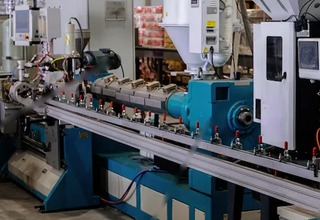
Extruder reduction gearboxes and thrust bearings, main drive motors, barrel heater zones, and screen changer and melt pump drives — the heart of the melt stream.
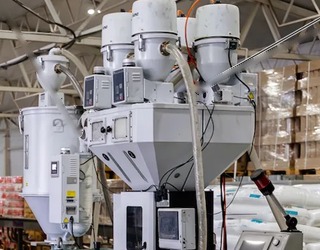
Hopper dryer blowers, vacuum loader pumps and conveying lines, and gravimetric blender dosing drives — the upstream equipment that decides whether dry, correctly dosed resin reaches the screw.
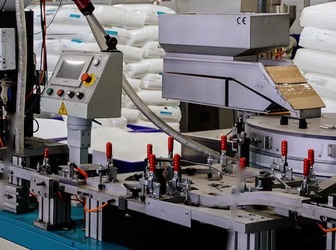
Calibration tank vacuum and coolant pumps, caterpillar and belt haul-off (puller) drives, cutter, saw and pelletizer drives, and winder drives — where dimension and cut quality are set.
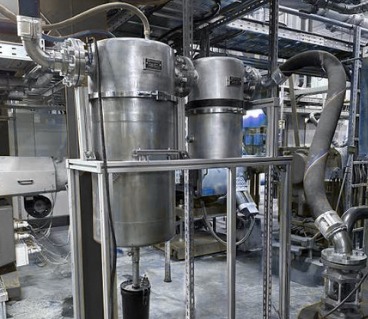
Chiller refrigeration compressors, circulation pumps and condenser fans, air compressors, vacuum pumps, cooling tower fans and granulator drives — central utilities and line auxiliaries where one failure can stop several lines at once.
Recommended configuration for a plastics plant. Final coverage is set per asset during the site survey.
Line-critical rotating assets | UltraVibe™ 4-in-1 — ultrasound, HFE, vibration, temperature. Wired (M12, Modbus RTU over RS-485, 24 V DC), IP69K/IP67, −40 °C to +105 °C |
|---|---|
Broad plant coverage | VELO™ Series temperature and vibration monitoring — VeloSense™ wireless (5+ year battery), VeloLink™ wired IP67 for tight mounts, VeloShield™ IP69K stainless steel. −40 °C to +150 °C |
Hard-to-reach and hot bearings | AI LubeMatrix™ — online condition-based lubrication triggered by the ultrasonic friction signature. NLGI 1–3, 24 V DC, IP66 / NEMA 4X |
Barrel zone thermal | Non-contact infrared (IR) probes on barrel heater zones and the die — zone profile, failed heater bands and melt-temperature drift |
Electrical | PULSE Series™ — current, infrared, airborne ultrasound and cabinet climate on extruder drives, motors and panels |
Analytics & integration | MatrixHub™ — per-asset baselines, thresholds in 24–48 hours, Modbus, MQTT, OPC-UA and REST into your PLC, SCADA and CMMS |
Predictive maintenance for plastics plants is the continuous monitoring of the assets that keep pipe, profile, film and sheet extrusion, injection molding, blow molding and thermoforming lines running — extruder gearboxes and motors, barrel heater zones, dryers, loaders, blenders, haul-offs, cutters and utility compressors, pumps and fans — using ultrasound, vibration, temperature and electrical data. A developing fault is caught at its earliest stage and corrected on a planned schedule instead of scrapping a run or causing unplanned downtime.
In one published case, an extruder motor bearing failure was documented at $24,000, with up to $36,000 more for a motor rewind — before lost production, purge and scrap. Across five A-critical extruder motors, preventing those failures avoided $120,000–$180,000. The failed part is rarely the whole bill: a stopped extruder also costs the resin in the barrel and the run in progress.
Most unplanned downtime on an extrusion line comes from the drive train and the heat: extruder gearbox and thrust bearing wear, drive motor bearing failures — often from under- or over-greasing on time-based routes — failed barrel heater bands, and screen changer or melt pump problems. Upstream dryer and loader faults and downstream haul-off or cutter failures stop the line just as surely, because the melt stream cannot pause.
On five A-critical extruder motors at a continuous-production plant, ultrasound sensors found under-lubrication that time-based manual greasing had missed. AI LubeMatrix™ corrected it autonomously, bearing friction fell from about 57 dB to about 50 dB, lubrication-related failures dropped to zero, and the plant avoided $120,000–$180,000 in downtime and repair costs.
Extruder bearings run hot, heavily loaded and continuously, which breaks grease down faster than a calendar schedule assumes. Time-based greasing under-lubricates some bearings and over-greases others, damaging seals. Gearboxes add gear-mesh wear and thrust bearing loading. Ultrasound detects rising friction first, then HFE and vibration show bearing and gear-mesh defects as they develop.
Start with the assets whose failure stops the melt stream and that have no installed spare: extruder gearboxes and thrust bearings, main drive motors, barrel heater zones, screen changers and melt pumps. Then cover hopper dryers, loaders and blenders upstream, haul-offs and cutters downstream, and the shared utilities — chiller compressors and pumps, air compressors, vacuum pumps and granulator drives.
Non-contact infrared (IR) probes profile the surface temperature of every barrel heater zone and the die, exposing zone drift, failed heater bands and melt-temperature deviation before off-spec product is made. Because the readings stream into MatrixHub™ alongside vibration and ultrasound, a thermal problem and a mechanical one on the same extruder are seen together.
Ultrasonic greasing is online condition-based lubrication driven by the bearing's ultrasonic friction signature instead of a calendar. AI LubeMatrix™ reads live online ultrasound, dispenses grease only when friction shows the bearing needs it, at the dose it needs, then confirms friction returns to baseline — removing both the under-lubrication and the seal-damaging over-greasing of time-based routes. It is triggered by ultrasound alone, never by temperature or vibration.
Yes. The same sensing covers the rotating and thermal assets common to molding: screw drive motors and gearboxes, hydraulic pump motors, barrel heater zones, mold temperature controller pumps, chiller compressors and granulator drives. The published results on this page come from extrusion lines; molding coverage is engineered per machine during the site survey.
Most plastics utilities are central systems, so one failure can stop every line they feed. Chillers cool barrels, molds and calibration tanks, and run on refrigeration compressors, pumps and fans; air compressors drive pneumatic controls and conveying; vacuum pumps hold sizing in calibration tanks. Vibration, temperature and current monitoring on their motors, fans and bearings catches developing faults before a whole hall of lines loses cooling or air.
No. MatrixHub™ performs the analysis and the Industrial Matrix Customer Success team validates every finding with your team on a fixed biweekly cadence. Extruder gearbox, motor and barrel-zone findings arrive already interpreted, with the corrective action defined and timed to your next changeover.
Predictive maintenance on an extrusion line identifies that an asset — an extruder gearbox, a drive motor, a melt pump — is degrading before it fails. Prescriptive maintenance goes further and specifies, or executes, the fix: predictive tells you an extruder motor bearing is under-lubricated; prescriptive greases it. Industrial Matrix delivers both — validated findings become work orders timed to changeovers, and AI LubeMatrix™ executes lubrication corrections autonomously.
A plastics plant should look for sensing that covers the whole failure curve — ultrasound and HFE, not vibration alone; thermal coverage of barrel zones; hardware rated for heat and continuous duty; PLC, SCADA and CMMS integration; human validation so false alarms never reach the work queue; and a path from alert to executed correction. Several vendors now combine vibration and ultrasound sensing. Industrial Matrix is the only company that combines a full condition monitoring sensor ecosystem with an autonomous condition-based lubrication actuator in one closed loop.
Sensors mount externally on gearboxes and bearing housings while the line keeps running, and MatrixHub™ sets each asset's alarm thresholds autonomously within 24 to 48 hours. Most plants start on extruder gearboxes and drive motors, then extend to dryers, loaders, downstream equipment and utilities — with no baseline study and no machine-by-machine manual tuning.
Our Vision
A plastics plant where no extruder bearing fails by surprise and no barrel zone drifts unseen. Every gearbox heard over the line, every lubrication fault corrected on measured friction, every finding validated and closed — the foundation of machine self-healing, one standard across every plant.