
Every Roller Heard. Every Bearing Greased. The Kiln Keeps Turning.
Continuous Condition Monitoring for the Assets That Stop a Kiln.

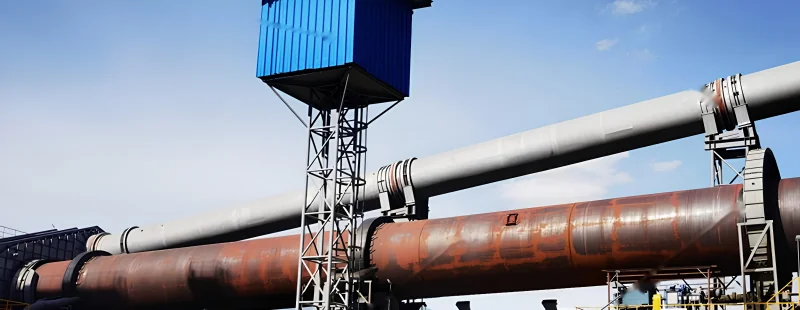
Predictive Maintenance for Cement Plants
Every roller, gear and fan — monitored in real time.
Continuous Condition Monitoring for the Assets That Stop a Kiln.
Predictive maintenance for cement plants is continuous condition monitoring of the equipment that keeps clinker and cement moving — kiln drives, girth gears, support rollers, mills, ID fans and bucket elevators — so a developing fault is corrected on a planned schedule instead of stopping the kiln. Coverage spans raw, coal and cement mill drive trains, cooler and baghouse fans, riding ring stations, the kiln shell, clinker cooler grate drives, separator and preheater fans, belt conveyors, packing plant drives, compressed air and MCC panels, combining ultrasound, vibration, temperature, infrared and electrical monitoring with validated analysis and autonomous lubrication.
A cement plant is built around one rotary kiln: when a support roller, the kiln drive or an ID fan fails, the kiln stops, and restarting it costs far more than the repair. Material handling is just as exposed. At one cement and materials processing plant, rising axial vibration flagged a developing bucket elevator chain failure early enough to fix it in planned non-production time — preventing 8 hours of unplanned downtime valued at $84,000 and avoiding $92,920 in total.
UltraVibe™ captures ultrasound, HFE, vibration and temperature at every critical bearing — including the slow-turning support rollers where conventional vibration analysis struggles — and non-contact infrared probes profile the kiln shell zone by zone. MatrixHub™ learns each asset's baseline and ranks every deviation by production risk. Industrial Matrix reliability experts validate each finding before it reaches your work queue, and AI LubeMatrix™ performs online condition-based lubrication — ultrasonic greasing — on dusty fan, motor and conveyor bearings that routes miss. From the first ultrasonic signal to verified corrective action, the closed-loop reliability ecosystem closes inside your plant.
Precision at the Core
01
The raw mill, kiln, cooler and finish mill all serve one rotating furnace. When a support roller, the kiln drive or an ID fan fails, the whole process stops, and a kiln restart is slow and costly.
02
Support rollers and girth gears turn so slowly that conventional vibration analysis misses early damage. Ultrasound and low-speed HFE detect friction and fatigue while there is still time to plan the repair.
03
Cement dust and radiant heat strip lubricant faster than any calendar schedule assumes. AI LubeMatrix™ doses fan, motor and conveyor bearings on measured ultrasonic friction, then verifies the result.
04
Kiln and mill repairs cost least inside a planned shutdown. Every validated finding becomes a prioritized work order, reviewed in our biweekly Customer Success meeting and scheduled into your next planned stop.
$92,920
avoided on one cement plant bucket elevator — repair moved into planned downtime
8 hrs
of unplanned downtime prevented, valued at $84,000
24–48 hrs
for MatrixHub™ to set each asset's alarm thresholds autonomously
Failure Mode | Signature We Detect | Consequence If Missed |
|---|---|---|
Support roller and riding ring (tire) bearing fatigue | Low-speed HFE and a rising ultrasonic friction signature on roller stations | Kiln stop, shell ovality and tire damage — the most expensive mechanical outage in the plant |
Girth gear and pinion tooth wear or misalignment | HFE energy, crest factor and gear-mesh changes on the open gear set | Accelerated tooth wear, pinion failure and an extended kiln outage |
Kiln main drive gearbox wear and overload | Gear-mesh sidebands, HFE and current drift on the drive motor (PULSE Series™) | Drive trip with the kiln hot — long-lead gearbox repair |
Kiln shell hot spots and refractory loss | Non-contact infrared (IR) shell profiling, zone by zone | Shell deformation, refractory failure and an emergency stop |
ID and preheater fan imbalance from buildup | Elevated vibration at running speed and bearing-wear trends | Lost draft, reduced kiln output and fan bearing failure |
Raw mill and cement mill gear and trunnion wear | Gear-mesh sidebands, liner-impact signatures and trunnion bearing temperature | Mill stop — raw meal or finished cement production lost |
Clinker cooler grate drive and fan faults | Drive vibration, HFE and fan imbalance trends | Hot clinker backs up and the kiln has to slow or stop |
Bucket elevator chain elongation and sprocket wear | Rising axial vibration from the established baseline — the signature in the published case | 8 hours of unplanned downtime valued at $84,000, a $7,000 chain guard and emergency labour |
Belt conveyor pulley bearing wear and slip | HFE on pulley bearings and speed and vibration changes on drives | Material stops reaching the kiln or mills |
Compressed air leaks and MCC overheating | Ultrasound on air lines; infrared and current monitoring on panels and drives | Wasted energy, pneumatic faults and electrical trips |
Sense → Analyze → Validate → Act
01
UltraVibe™ 4-in-1 sensors on support rollers, kiln and mill drives and fans capture ultrasound, HFE, vibration and temperature at the bearing — through dust, heat and slow, heavy rotation.
02
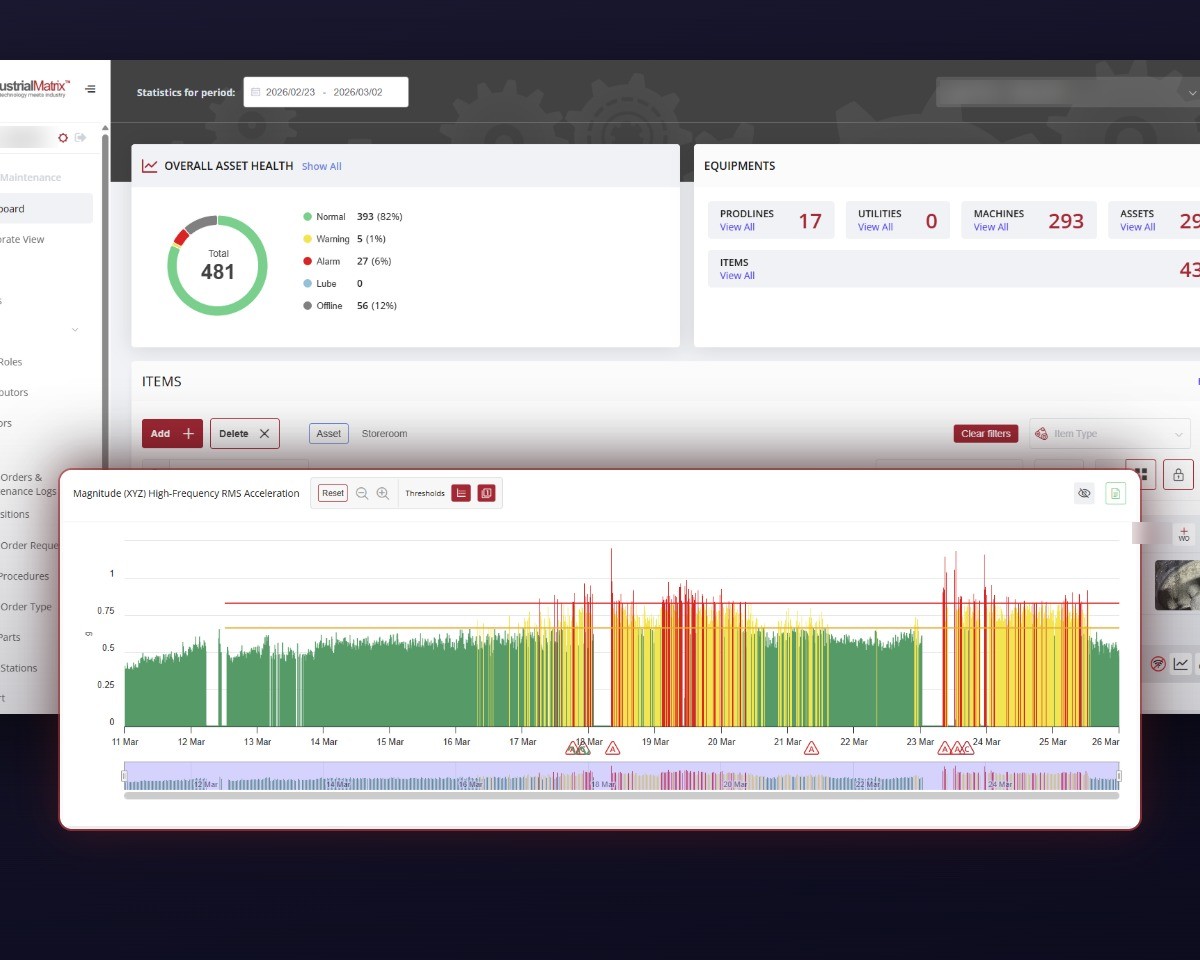
MatrixHub™ learns each asset's normal operating signature and ranks every deviation by what it would stop — the kiln support roller above the utility fan.
03
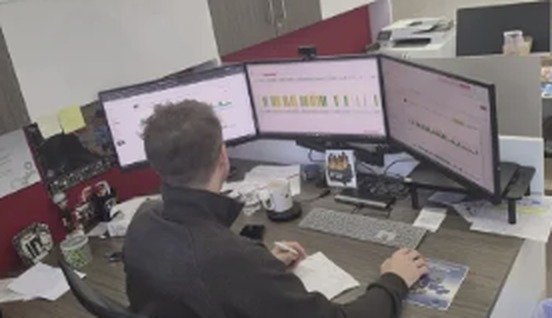
Our Customer Success team validates every flagged anomaly before it reaches you, so only confirmed findings reach your work queue.
04
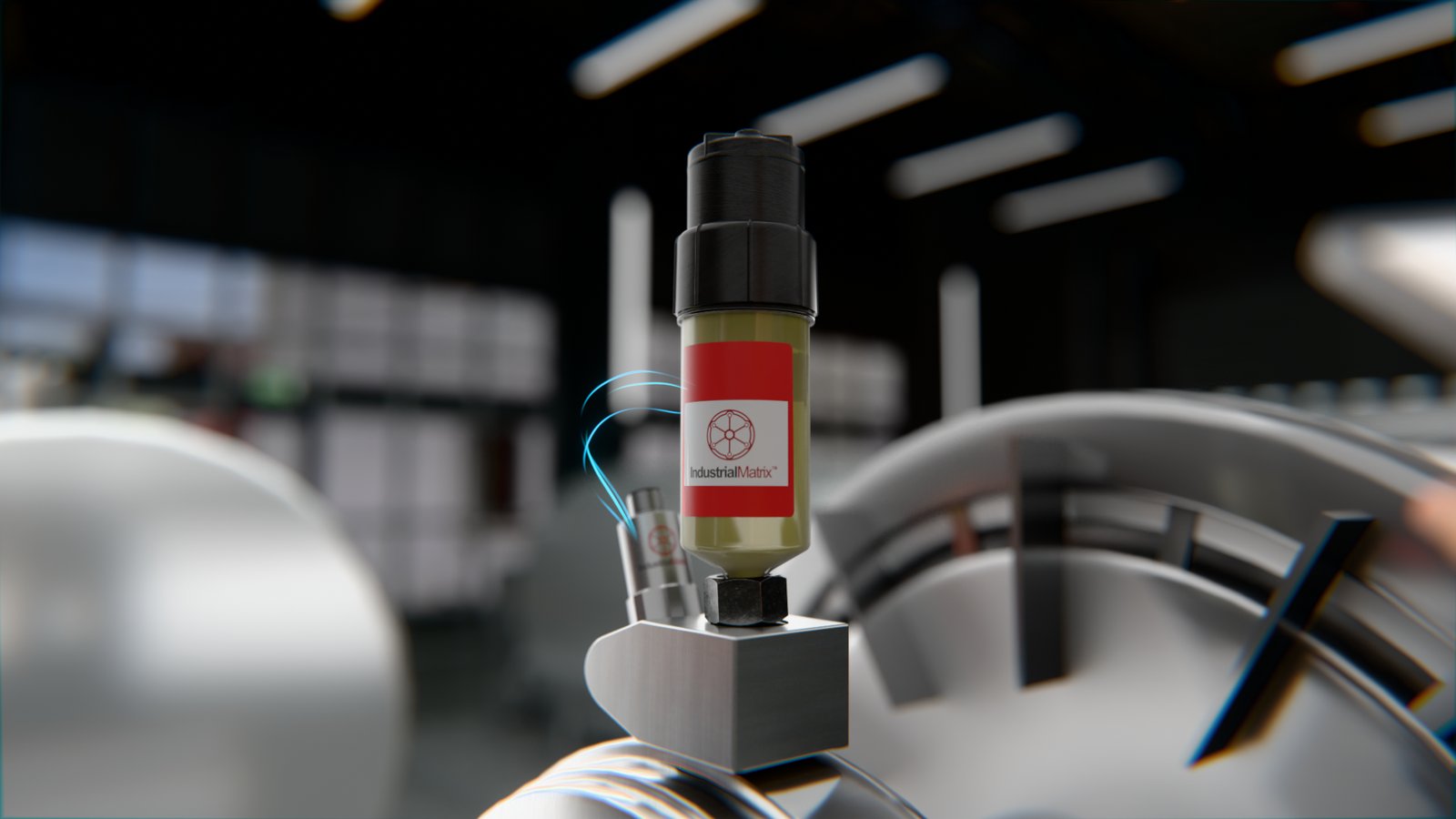
Lubrication faults are corrected autonomously by AI LubeMatrix™ on live ultrasound. Every other confirmed fault becomes a prioritized work order, reviewed in our biweekly CS meeting and tracked until solved.
Every plant gets its own coverage plan from a site survey: the kiln, mills and main fans get full 4-in-1 UltraVibe™ monitoring, and the supporting equipment across the rest of the plant gets VELO™ Series vibration and temperature sensors.
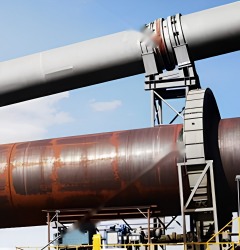
Kiln main drive motor and reduction gearbox, girth gear and pinion, and support roller and riding ring bearings — slow, heavily loaded rotation where faults hide from routine checks.
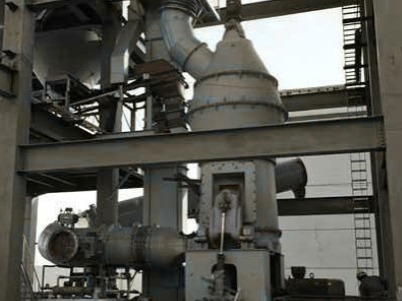
Vertical roller mill and ball mill motors, gearboxes, trunnion bearings and separator drives — the raw, coal and finish mills behind every tonne of cement.
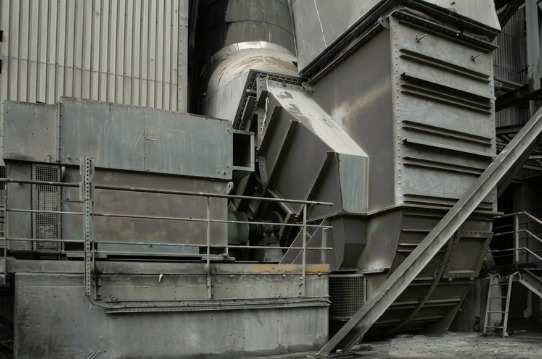
ID, preheater, cooler and baghouse fan bearings and motors, and clinker cooler grate drives — the draft and cooling assets that set how hard the kiln can run.
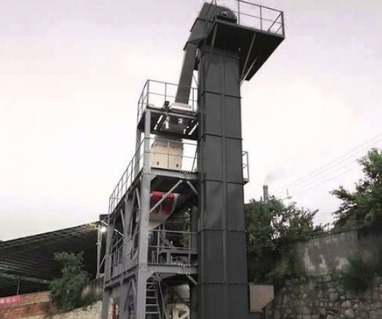
Belt conveyor and bucket elevator drives and gearboxes, head and tail pulley bearings and chain drives — the transfer network that feeds the kiln and mills.
Recommended configuration for a cement plant. Final coverage is set per asset during the site survey.
Kiln, mill and fan bearings | UltraVibe™ 4-in-1 — ultrasound, HFE (including low-speed HFE for support rollers), vibration, temperature. Wired (M12, Modbus RTU over RS-485, 24 V DC), IP69K/IP67, −40 °C to +105 °C |
|---|---|
Broad plant coverage | VELO™ Series temperature and vibration monitoring — VeloSense™ wireless (5+ year battery) for conveyor galleries and remote drives, VeloLink™ wired IP67 for tight mounts. −40 °C to +150 °C |
Kiln shell and panels | Non-contact infrared (IR) probes — kiln shell zone profile, refractory hot spots, MCC and electrical house temperature |
Hard-to-reach bearings | AI LubeMatrix™ — online condition-based lubrication triggered by the ultrasonic friction signature, on fan, motor, pulley and elevator bearings. NLGI 1–3, 24 V DC, IP66 / NEMA 4X |
Electrical | PULSE Series™ — current, infrared, airborne ultrasound and cabinet climate on kiln, mill and fan drives and MCCs |
Analytics & integration | MatrixHub™ — per-asset baselines, thresholds in 24–48 hours, Modbus, MQTT, OPC-UA and REST into your PLC, SCADA and CMMS |
Predictive maintenance for cement plants is the continuous monitoring of the assets that keep the kiln and mills running — the rotary kiln drive, girth gear and support rollers, kiln shell, raw, coal and cement mills, ID, preheater and cooler fans, and conveyors and bucket elevators — using ultrasound, vibration, temperature, infrared and electrical data. A developing fault is caught early and corrected on a planned schedule instead of causing unplanned downtime or a kiln stop.
In one published case at a cement and materials processing plant, 8 hours of unplanned bucket elevator downtime was valued at $84,000 — and $92,920 once a $7,000 chain guard and $1,920 of emergency labour are added. The cost of any stop depends on which asset fails and whether the kiln has to come down, because a kiln restart adds hours of lost clinker production on top of the repair.
Most unplanned downtime in a cement plant starts on the kiln line: support roller and riding ring bearing failures, girth gear and pinion wear, kiln drive gearbox faults, refractory loss that creates a shell hot spot, and ID or cooler fan failures caused by buildup and bearing wear. Mill drive trains and material handling follow, because a stopped bucket elevator, belt conveyor or mill quickly starves or backs up the kiln.
At a major cement and materials processing facility, vibration and velocity sensors on a high-criticality bucket elevator showed axial velocity trending upward from its baseline. Industrial Matrix specialists confirmed a developing chain and sprocket problem, maintenance removed a link to correct the elongation during non-production time, vibration returned to stable ISO levels, and the plant avoided $92,920.
Start with the assets whose failure stops the kiln and that have no installed spare: support roller and riding ring bearings, the girth gear and pinion, the kiln main drive, ID and preheater fans, and the clinker cooler drives. Then cover the raw, coal and cement mill drive trains, baghouse fans, bucket elevators and belt conveyors, packing plant drives, compressed air, and the MCC panels that power them.
A cement kiln turns slowly — a few revolutions per minute — under enormous load, so the support rollers and girth gear generate little vibration energy while early damage develops. Conventional vibration routes often miss it. Ultrasound detects rising friction first, low-speed HFE picks up bearing and gear fatigue, and temperature trending confirms it, giving the plant time to plan the repair around a scheduled stop.
Non-contact infrared (IR) probes profile the kiln shell zone by zone, exposing hot spots, refractory wear and thermal drift before shell deformation forces an emergency stop. Because the shell profile streams into MatrixHub™ alongside vibration and ultrasound from the rollers and drive, a thermal problem and a mechanical one on the same kiln are seen together.
Mills carry the highest drive power in a cement plant, from the raw mill and coal mill to the finish mill. On vertical roller mills, monitoring covers the main gearbox, mill motor, mill fan and separator drive; on ball mills, the girth gear and pinion, trunnion bearings and drive train. Gear-mesh sidebands and HFE expose gear and bearing wear, impact signatures reveal liner problems, and temperature trending confirms the fault — so a mill repair is planned around production instead of forced by it.
Yes, provided the hardware is sealed for abrasive dust. UltraVibe™ is wired and sealed to IP69K/IP67, and operates from −40 °C to +105 °C; the VELO™ Series covers −40 °C to +150 °C, with VeloSense™ wireless for conveyor galleries and remote drives. Sensors mount on bearing housings, and the kiln shell is measured without contact by infrared probes.
Ultrasonic greasing is online condition-based lubrication driven by the bearing's ultrasonic friction signature instead of a calendar. AI LubeMatrix™ reads live online ultrasound and dispenses grease only when friction shows a bearing needs it, at the dose it needs, then confirms friction returns to baseline. In a cement plant it suits the dusty fan, motor, conveyor pulley and elevator bearings that routes miss. It is triggered by ultrasound alone, never by temperature or vibration.
Bucket elevators carry heavy load continuously, and chain elongation and sprocket wear accelerate over time. Continuous vibration and velocity monitoring builds a baseline and flags the upward trend that signals a developing drive problem — in the published case, early enough to correct chain elongation in non-production time and avoid $92,920 in downtime, damage and labour.
Yes. Leaks and blow-by produce airborne ultrasound that can be detected long before they are audible on a noisy plant floor. Monitoring the compressed air system with ultrasound alongside the compressors' vibration and temperature finds the losses that waste energy and starve pneumatic controls, dust collectors and bin activators.
No. MatrixHub™ performs the analysis and the Industrial Matrix Customer Success team validates every finding with your team on a fixed biweekly cadence. Low-speed support roller and girth gear diagnostics — normally specialist work — arrive already interpreted, with the corrective action defined and timed to your next planned kiln or mill stop.
Predictive maintenance in a cement plant identifies that an asset — a support roller bearing, a mill gearbox, an ID fan — is degrading before it fails. Prescriptive maintenance goes further and specifies, or executes, the fix: predictive tells you a baghouse fan bearing is starving in the dust; prescriptive greases it. Industrial Matrix delivers both — validated findings become work orders timed to planned stops, and AI LubeMatrix™ executes lubrication corrections autonomously.
A cement plant should look for sensing that covers the whole failure curve — ultrasound and low-speed HFE, not vibration alone; infrared coverage of the kiln shell; hardware rated for dust and heat; PLC, SCADA and CMMS integration; human validation so false alarms never reach the work queue; and a path from alert to executed correction. Several vendors now combine vibration and ultrasound sensing. Industrial Matrix is the only company that combines a full condition monitoring sensor ecosystem with an autonomous condition-based lubrication actuator in one closed loop.
Sensors mount externally on bearing housings and gearboxes while the kiln and mills keep running, and MatrixHub™ sets each asset's alarm thresholds autonomously within 24 to 48 hours. Most plants start on the kiln line and extend to the mills, fans and material handling — with no baseline study and no machine-by-machine manual tuning.
Our Vision
A cement plant where no support roller fails by surprise and no kiln stops for a fault that could have been planned. Every bearing heard through the dust, every lubrication fault corrected on measured friction, every finding validated and closed — the foundation of machine self-healing, one standard across every plant.