
Every Compressor Heard. Every Bearing Greased. The Cold Chain Holds.
Continuous Condition Monitoring for the Assets That Stop a Meat Plant.

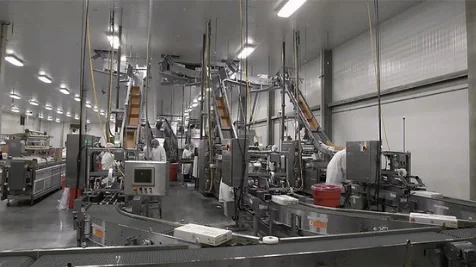
Predictive Maintenance for Meat Processing Plants
Every compressor, freezer and conveyor — monitored in real time.
Continuous Condition Monitoring for the Assets That Stop a Meat Plant.
Predictive maintenance for meat and poultry processing plants is the continuous condition monitoring of the equipment that keeps product moving and cold — ammonia compressors, spiral and blast freezers, conveyors, grinders and utilities — so a developing fault is corrected on a planned schedule instead of breaking the cold chain. Coverage spans evaporator and condenser fans, glycol and brine pumps, freezer drives and gearboxes, mixer and bowl cutter drives, slicers, stuffer vacuum pumps, smokehouse fans, boiler feed pumps, air compressors, wastewater and rendering drives, combining ultrasound, vibration, temperature and electrical monitoring with validated analysis and autonomous lubrication.
In a meat plant, refrigeration is production: when an ammonia compressor or a freezer drive stops, product temperature starts climbing and the line behind it has nowhere to go. In one published frozen food plant case, a single compressor carried nearly half of the facility's freezing capacity — and two weeks of rising vibration flagged a coupling misalignment early enough to fix it in a brief production pause, protecting up to 26 tonnes of frozen product and avoiding $25,000–$35,000.
UltraVibe™ captures ultrasound, HFE, vibration and temperature at every critical bearing, and VeloShield™ adds IP69K stainless-steel sensing for washdown zones. MatrixHub™ learns each asset's baseline and ranks every deviation by production risk. Industrial Matrix reliability experts validate each finding before it reaches your work queue, and AI LubeMatrix™ performs online condition-based lubrication — ultrasonic greasing — dosing only what measured friction calls for, which keeps excess grease out of hygienic zones. From the first ultrasonic signal to verified corrective action, the closed-loop reliability ecosystem closes inside your plant.
Precision at the Core
01
Ammonia compressors, evaporator fans and freezer drives run around the clock. When one fails, product temperature starts climbing within hours and every line upstream backs up behind it.
02
Daily high-pressure sanitation and caustic chemicals wash lubricant out of conveyor and drive bearings. Calendar greasing either starves bearings or over-greases them in hygienic zones.
03
Freezer drives, evaporator fans and overhead conveyors sit in cold, wet or confined spaces that routes skip. AI LubeMatrix™ doses them on the ultrasonic friction signature and verifies the result.
04
A breakdown mid-shift strands product between the kill floor and the cooler. Every validated finding becomes a prioritized work order, reviewed in our biweekly Customer Success meeting and scheduled into your next sanitation shift or planned stop.
$25K–$35K
avoided by catching a freezing-compressor coupling misalignment early at a frozen food plant
26 t
of frozen product protected in the same case
2 wks
of rising vibration before the failure spike — time to plan the repair
Failure Mode | Signature We Detect | Consequence If Missed |
|---|---|---|
Refrigeration compressor coupling misalignment | Rising axial vibration trend on the compressor–motor assembly | Lost freezing capacity and product temperature excursions — up to 26 tonnes of frozen product at risk in one published case |
Compressor and motor bearing wear | HFE bearing-defect frequencies and a rising ultrasonic friction signature | Compressor trip and an extended refrigeration outage |
Evaporator and condenser fan imbalance and bearing faults | Elevated vibration at running speed and bearing-wear trends | Warm rooms, iced coils and lost cooling capacity |
Spiral and blast freezer drive and gearbox wear | Gear-mesh sidebands and rising HFE energy on drum and belt drives | Freezer stops with product inside — long-lead gearbox repair |
Overhead rail and shackle line drive and take-up bearing wear | Rising ultrasonic friction, HFE bearing-defect frequencies and gear-mesh changes on line drives | The kill or evisceration line stops — every downstream department waits |
Conveyor bearing lubrication breakdown in washdown zones | Rising ultrasonic friction signature — at the earliest stage, before vibration changes | Bearing seizure on the line, and over-greasing that puts lubricant near product |
Grinder, mixer and bowl cutter drive overload | Current drift and overload signatures (PULSE Series™), HFE on gearboxes | Line stop with product held, motor and gearbox damage |
Smokehouse and oven circulation fan faults | Vibration and temperature drift on fan bearings and motors | Uneven cook and cook-step deviations |
Glycol, brine and process pump wear and cavitation | Vibration and temperature trends on pump bearings and seals | Lost chilling and temperature excursions |
Boiler feed, air compressor, wastewater and rendering drive faults | Vibration, temperature and current drift on utility pumps, compressors and blowers | Lost steam for cooking and sanitation, lost air, or wastewater limits that constrain production |
Sense → Analyze → Validate → Act
01
UltraVibe™ 4-in-1 sensors on compressors, freezer drives and line-critical conveyors capture ultrasound, HFE, vibration and temperature at the bearing — through cold, washdown and continuous duty.
02
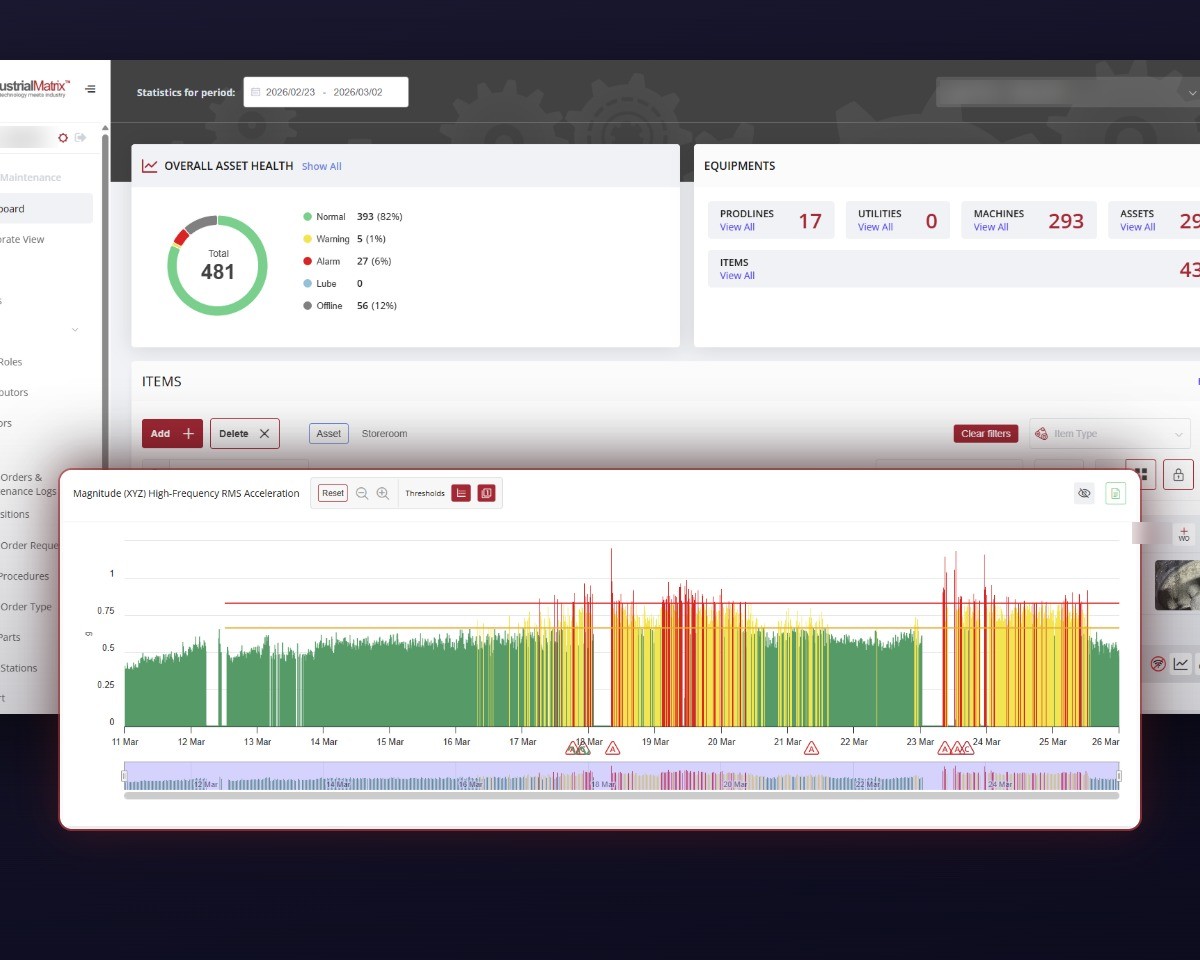
MatrixHub™ learns each asset's normal operating signature and ranks every deviation by what it would stop — the refrigeration compressor above the utility fan.
03
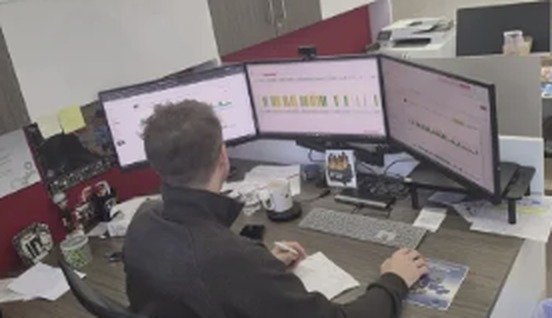
Our Customer Success team validates every flagged anomaly before it reaches you, so only confirmed findings reach your work queue.
04
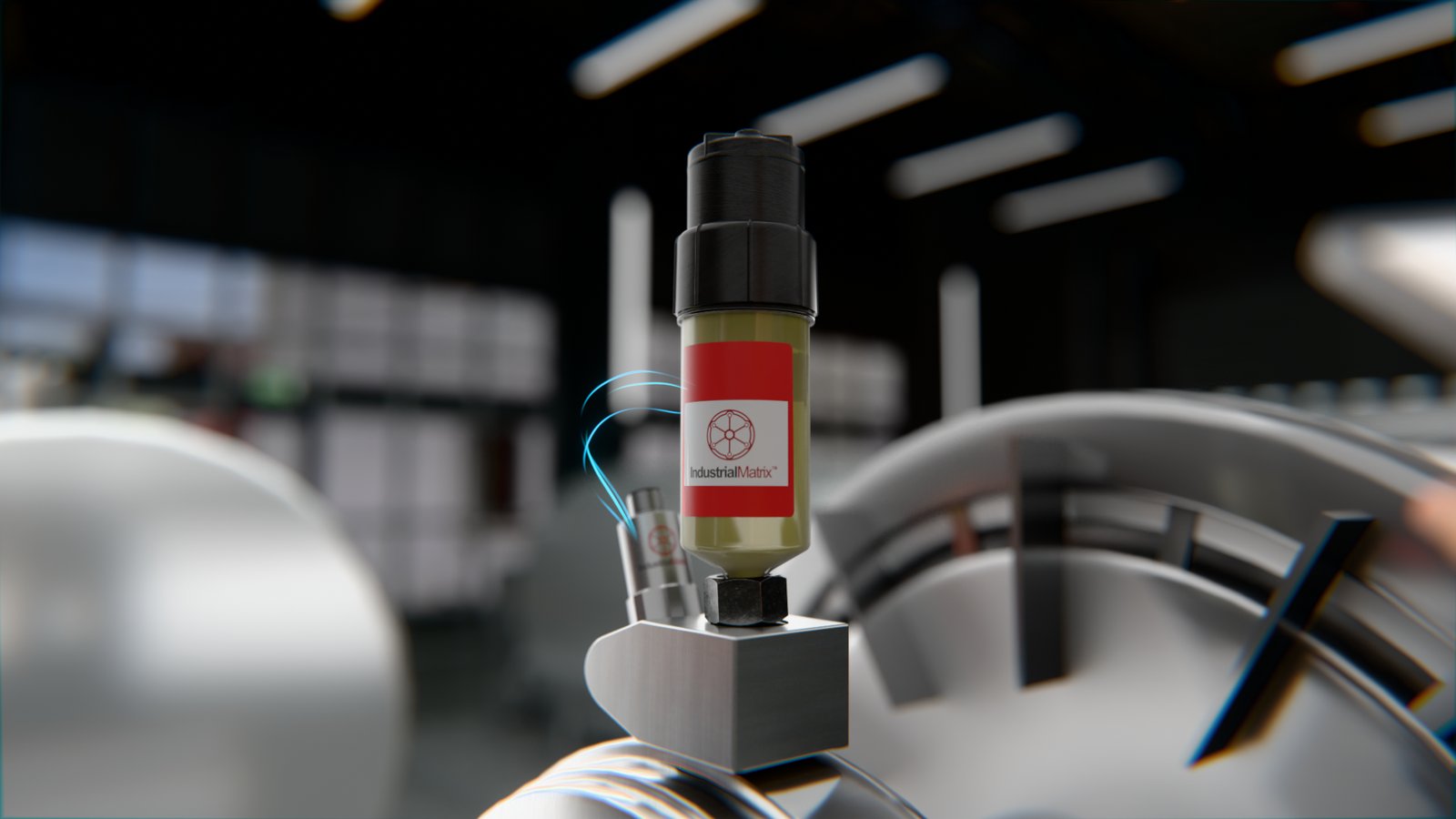
Lubrication faults are corrected autonomously by AI LubeMatrix™ on live ultrasound. Every other confirmed fault becomes a prioritized work order, reviewed in our biweekly CS meeting and tracked until solved.
Every plant gets its own coverage plan from a site survey: refrigeration, freezers and line-critical drives get full 4-in-1 UltraVibe™ monitoring, and the supporting equipment and washdown zones get VELO™ Series vibration and temperature sensors.
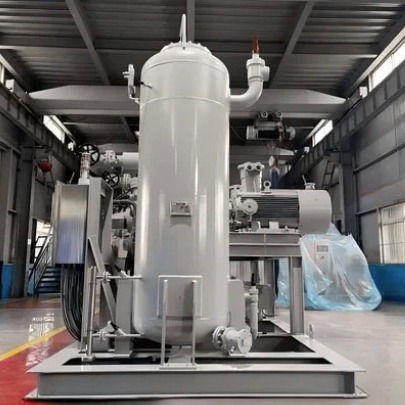
Ammonia screw compressor and motor bearings and couplings, evaporator and condenser fans, glycol and brine pumps, and spiral and blast freezer drives — the cold chain behind every tonne of product.
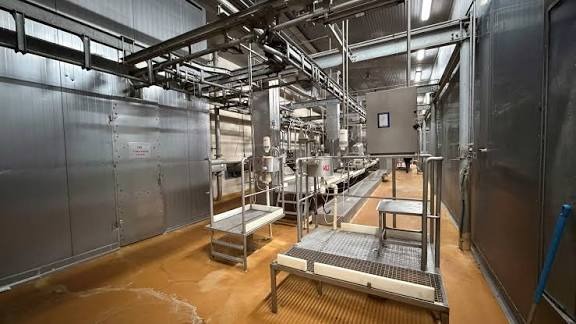
Overhead carcass rail and poultry shackle line drive motors, gearboxes and take-up bearings — the line every other department waits on when it stops.
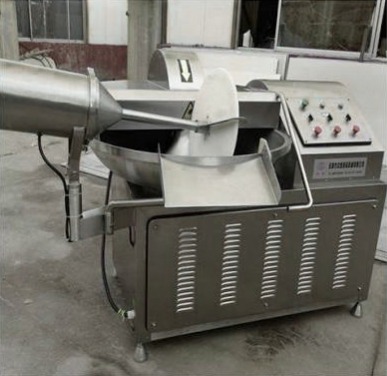
Grinder, mixer-grinder and bowl cutter gearboxes and motors, stuffer vacuum pumps and the conveyor drives between them — high-torque processing where overload and bearing wear build fast.
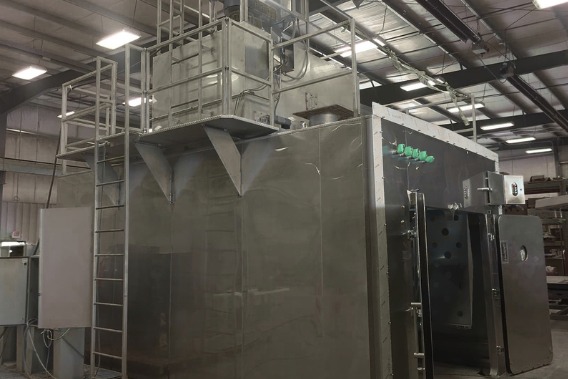
Smokehouse and oven circulation fans, slicer and portioning drives, vacuum packaging pumps and case packer drives — the cook, slice and pack end of the plant.
Recommended configuration for a meat processing plant. Final coverage is set per asset during the site survey.
Line-critical rotating assets | UltraVibe™ 4-in-1 — ultrasound, HFE, vibration, temperature. Wired (M12, Modbus RTU over RS-485, 24 V DC), IP69K/IP67, −40 °C to +105 °C |
|---|---|
Washdown and sanitation zones | VeloShield™ — IP69K stainless steel, chemically resistant vibration and temperature sensing for high-pressure washdown and caustic sanitation. −40 °C to +150 °C |
Broad plant coverage | VELO™ Series — VeloSense™ wireless (5+ year battery) for cold rooms and hard-to-cable areas, VeloLink™ wired IP67 for tight mounts. −40 °C to +150 °C |
Hard-to-reach bearings | AI LubeMatrix™ — online condition-based lubrication triggered by the ultrasonic friction signature. NLGI 1–3, 24 V DC, IP66 / NEMA 4X |
Electrical | PULSE Series™ — current, infrared, airborne ultrasound and cabinet climate on compressor, grinder and conveyor drives and MCCs |
Analytics & integration | MatrixHub™ — per-asset baselines, thresholds in 24–48 hours, Modbus, MQTT, OPC-UA and REST into your CMMS |
Predictive maintenance for meat processing plants is the continuous monitoring of the assets that keep product moving and cold — ammonia refrigeration compressors, evaporator fans, spiral and blast freezers, conveyors, grinders, slicers, smokehouse fans and plant utilities — using ultrasound, vibration, temperature and electrical data. A developing fault is caught at its earliest stage and corrected on a planned schedule instead of causing unplanned downtime or breaking the cold chain.
In one published frozen food plant case, a single compressor supplied nearly half of the facility's freezing capacity; catching its coupling misalignment early protected up to 26 tonnes of frozen product, avoided a potential 12-hour shutdown, and saved $25,000–$35,000. The cost of any refrigeration failure depends on how much capacity the compressor carries and how much product is in the rooms it serves.
Most unplanned downtime in a meat plant traces to refrigeration and the line drives: ammonia compressor bearing wear and coupling misalignment, evaporator and freezer fan failures, spiral freezer gearbox wear, and kill floor or shackle line drive faults. Washdown adds a plant-specific cause — daily sanitation strips grease from conveyor and drive bearings, so lubrication failures are far more common than in a dry plant.
At a major frozen food processing plant, vibration and temperature sensors on a critical compressor–motor assembly showed vibration rising over two weeks before a rapid spike. Industrial Matrix specialists confirmed a developing coupling misalignment, the coupling was realigned during a brief production pause, and the plant lost no product and no capacity — $25,000–$35,000 in cost avoidance.
Start with the assets whose failure breaks the cold chain or stops the line and that have no installed spare: ammonia screw compressors and their motors, evaporator and condenser fans, spiral and blast freezer drives, kill floor (harvest floor) carcass rail and shackle line drives, and the main conveyor drives. Then extend coverage to grinders, mixers, bowl cutters, slicers and smokehouse fans, and to utilities — boiler feed pumps, air compressors and wastewater drives.
Because almost everything depends on it. Compressors, evaporators and freezers hold product at safe temperatures from kill floor to shipping, so one compressor trip can put several rooms and a full freezer load at risk within hours. Ammonia systems above 10,000 pounds also fall under OSHA Process Safety Management, which requires a mechanical integrity program — and continuous, timestamped condition data supports it.
Yes, provided the hardware is rated for caustic sanitation chemicals. VeloShield™ is IP69K, stainless steel and chemically resistant, built for high-pressure washdown and caustic sanitation; UltraVibe™ is sealed to IP69K/IP67; and VeloSense™ covers cold rooms and hard-to-cable areas wirelessly on a 5+ year battery. Sensors mount on bearing housings outside the product zone and stay in place through every sanitation cycle.
Ultrasonic greasing is online condition-based lubrication driven by the bearing's ultrasonic friction signature instead of a calendar. AI LubeMatrix™ reads live online ultrasound, dispenses grease only when friction shows the bearing needs it, at the dose it needs, then confirms friction returns to baseline. It uses the grease your plant already specifies (NLGI 1–3) and removes the over-greasing that puts lubricant near product. It is triggered by ultrasound alone, never by temperature or vibration.
For USDA FSIS and HACCP purposes, every reading, alert, validation and corrective action is timestamped and retained, so each asset's maintenance history is auditable instead of rebuilt from paper routes. Planned repairs replace emergency work in sanitized production areas, refrigeration faults are caught before temperatures drift, and condition-based lubrication cuts over-greasing — all of which support HACCP, USDA FSIS inspection and customer audit schemes such as SQF and BRCGS.
Spiral and blast freezers depend on drum and belt drives, gearboxes and fans running continuously at sub-zero temperatures — a spiral freezer that stops mid-run leaves product inside. Vibration and HFE catch gearbox and bearing wear as it develops, ultrasound detects lubrication breakdown first, and VeloSense™ wireless sensors cover cold areas without cable runs — so repairs are scheduled between production runs instead of mid-freeze.
Yes. Poultry plants share the same critical systems — ammonia refrigeration, spiral and IQF freezers, and conveyors — plus line-specific assets: shackle line drives and take-up bearings, evisceration line drives, and the auger drives and pumps of bird chillers. Line speeds are high and washdown is constant, so ultrasound-first sensing and IP69K hardware matter most. The published results on this page come from a frozen food plant; poultry coverage is engineered per line during the site survey.
No. MatrixHub™ performs the analysis and the Industrial Matrix Customer Success team validates every finding with your team on a fixed biweekly cadence. Refrigeration compressor, freezer and line-drive findings arrive already interpreted, with the corrective action defined and timed to your next sanitation shift.
Predictive maintenance in a meat plant identifies that an asset — an ammonia compressor, a freezer drive, a shackle line gearbox — is degrading before it fails. Prescriptive maintenance goes further and specifies, or executes, the fix: predictive tells you a conveyor bearing is starving after washdown; prescriptive greases it. Industrial Matrix delivers both — validated findings become work orders timed to sanitation shifts, and AI LubeMatrix™ executes lubrication corrections autonomously.
A meat plant should look for sensing that covers the whole failure curve — ultrasound and HFE, not vibration alone; IP69K hardware that survives washdown and caustic sanitation; coverage of refrigeration as well as the processing line; human validation so false alarms never reach the work queue; CMMS integration with an audit trail; and a path from alert to executed correction. Several vendors now combine vibration and ultrasound sensing. Industrial Matrix is the only company that combines a full condition monitoring sensor ecosystem with an autonomous condition-based lubrication actuator in one closed loop.
Sensors mount externally on bearing housings and gearboxes while production and refrigeration keep running, and MatrixHub™ sets each asset's alarm thresholds autonomously within 24 to 48 hours. Most plants start on the engine room and freezers, then extend to the kill floor, processing lines and utilities — with no baseline study and no machine-by-machine manual tuning.
Our Vision
A meat plant where no compressor fails by surprise and no freezer stops with product inside. Every bearing heard through the washdown, every lubrication fault corrected on measured friction, every finding validated and closed — the foundation of machine self-healing, one standard across every plant.