
Every Mixer Heard. Every Oven Bearing Greased. The Line Keeps Baking.
Continuous Condition Monitoring for the Assets That Stop a Bakery.

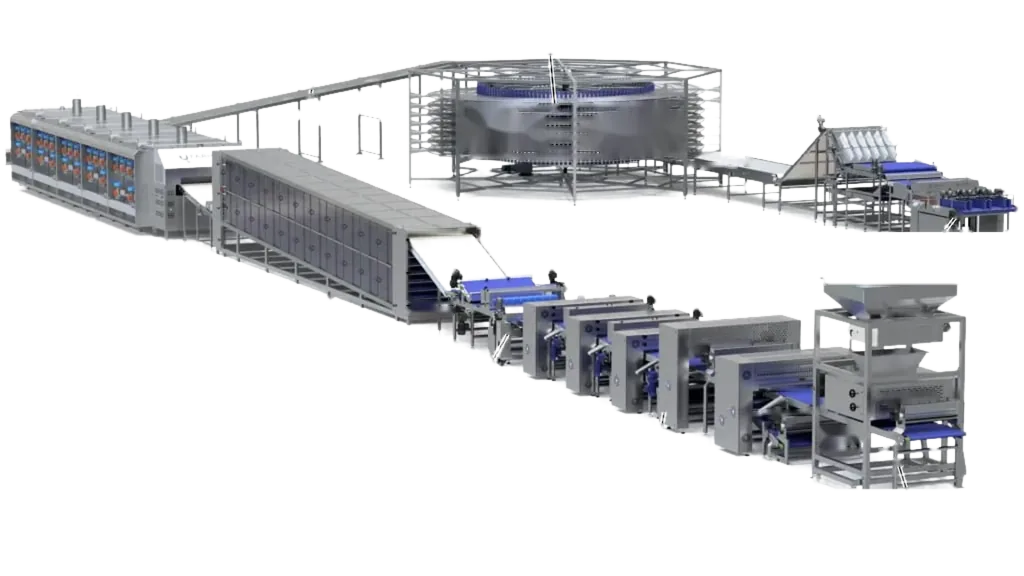
Predictive Maintenance for Industrial Bakeries
Every mixer, oven and conveyor — monitored in real time.
Continuous Condition Monitoring for the Assets That Stop a Bakery.
Predictive maintenance for industrial bakeries is the continuous condition monitoring of the equipment that moves dough from mixing to packaging — mixers, kneaders, proofers, tunnel ovens, spiral coolers and the utilities that serve them — so a developing fault is corrected on a planned schedule instead of stopping the line. Across bread, bun and specialty lines, coverage spans dividers, oven conveyors and burner zones, circulation and exhaust fans, spiral freezers, blowers, thermal oxidizers, compressors and the motors and gearboxes behind them, combining ultrasound, vibration, temperature and electrical monitoring with validated analysis and autonomous lubrication.
A bakery line runs on timing: a stopped mixer strands dough upstream, and an oven conveyor failure puts the product inside the oven at risk. Published bakery cases put that downtime at $4,000–$8,000 an hour. At one commercial bakery, the closed-loop reliability ecosystem cut unplanned downtime 28% and delivered $940,000 in savings, with a 5-month payback.
UltraVibe™ captures ultrasound, HFE, vibration and temperature at every critical bearing. MatrixHub™ learns each asset's baseline and ranks every deviation by production risk. Industrial Matrix reliability experts validate each finding before it reaches your work queue, and AI LubeMatrix™ performs online condition-based lubrication — ultrasonic greasing — dosing only what measured friction calls for, which keeps excess grease away from product zones. From the first ultrasonic signal to verified corrective action, the loop closes inside your bakery.
Precision at the Core
01
Mixers and kneaders run high torque and stop-start duty, batch after batch. Bearing wear and mounting faults build quietly until a motor or gearbox fails mid-batch, and dough cannot wait for a repair.
02
Oven conveyors, circulation fans and exhaust fans run hot and continuous. Heat strips lubricant faster than any calendar schedule assumes, and bearings starve between routes long before anyone hears them.
03
Manual routes tend to over-grease, and excess grease near product is a contamination and audit risk. AI LubeMatrix™ doses on the measured ultrasonic friction signature, then verifies friction returns to baseline.
04
A stop mid-bake scraps the dough already in the line. Every validated finding becomes a prioritized work order, reviewed in our biweekly Customer Success meeting and scheduled into your next sanitation window or changeover.
$940K
saved at one commercial bakery on the closed-loop ecosystem, with a 5-month payback
28%
less unplanned downtime at the same bakery
4–5 wks
of advance warning on published bakery roaster fan and kneader faults
Failure Mode | Signature We Detect | Consequence If Missed |
|---|---|---|
Mixer motor bearing degradation | Rising axial acceleration and HFE bearing-defect frequencies — before any audible or thermal symptom | Motor failure mid-batch, dough loss, missed deliveries — published at $5,000 per hour of downtime |
Kneader mounting looseness and misalignment | Abnormal radial and axial vibration, traced to its source instead of guessed at | Motor and gearbox damage, dough consistency problems — published at $5,000–$8,000 per hour |
Oven conveyor and fan bearing lubrication breakdown | Rising ultrasonic friction signature — at the earliest stage, before vibration changes | Bearing seizure on a hot line, product at risk, extended outage |
Tunnel oven burner-zone temperature drift | Non-contact infrared (IR) probes profiling each burner zone's surface temperature | Uneven bake, quality rejects and wasted fuel — found only at the end of the line |
Fan imbalance on ovens, roasters and coolers | Elevated vibration at running speed and bearing-wear trends | Uneven airflow, inconsistent bake or cooling, rising energy use |
Gearbox wear on spiral, proofer and conveyor drives | Gear-mesh sidebands and rising HFE energy | Long-lead gearbox replacement, extended outage |
Motor electrical faults | Current imbalance and overload drift (PULSE Series™) | Motor trip, winding damage |
Blower bearing and imbalance faults — flour conveying and combustion air | Rising ultrasonic friction signature, then elevated vibration at running speed | Flour stops reaching the mixers, or ovens lose combustion air — the whole line waits |
Thermal oxidizer fan and drive faults | Bearing-defect frequencies and vibration on oxidizer fans; current drift on their motors (PULSE Series™) | Oxidizer trip — the ovens it serves can be forced to stop to stay within the air permit |
Air and refrigeration compressor faults | Vibration and temperature drift, misalignment signatures on compressor drives | Lost compressed air for controls and packaging, or lost cooling and freezing capacity — product at risk |
Sense → Analyze → Validate → Act
01
UltraVibe™ 4-in-1 sensors on mixers, oven conveyors and line-critical drives capture ultrasound, HFE, vibration and temperature at the bearing — through heat, flour dust and sanitation.
02
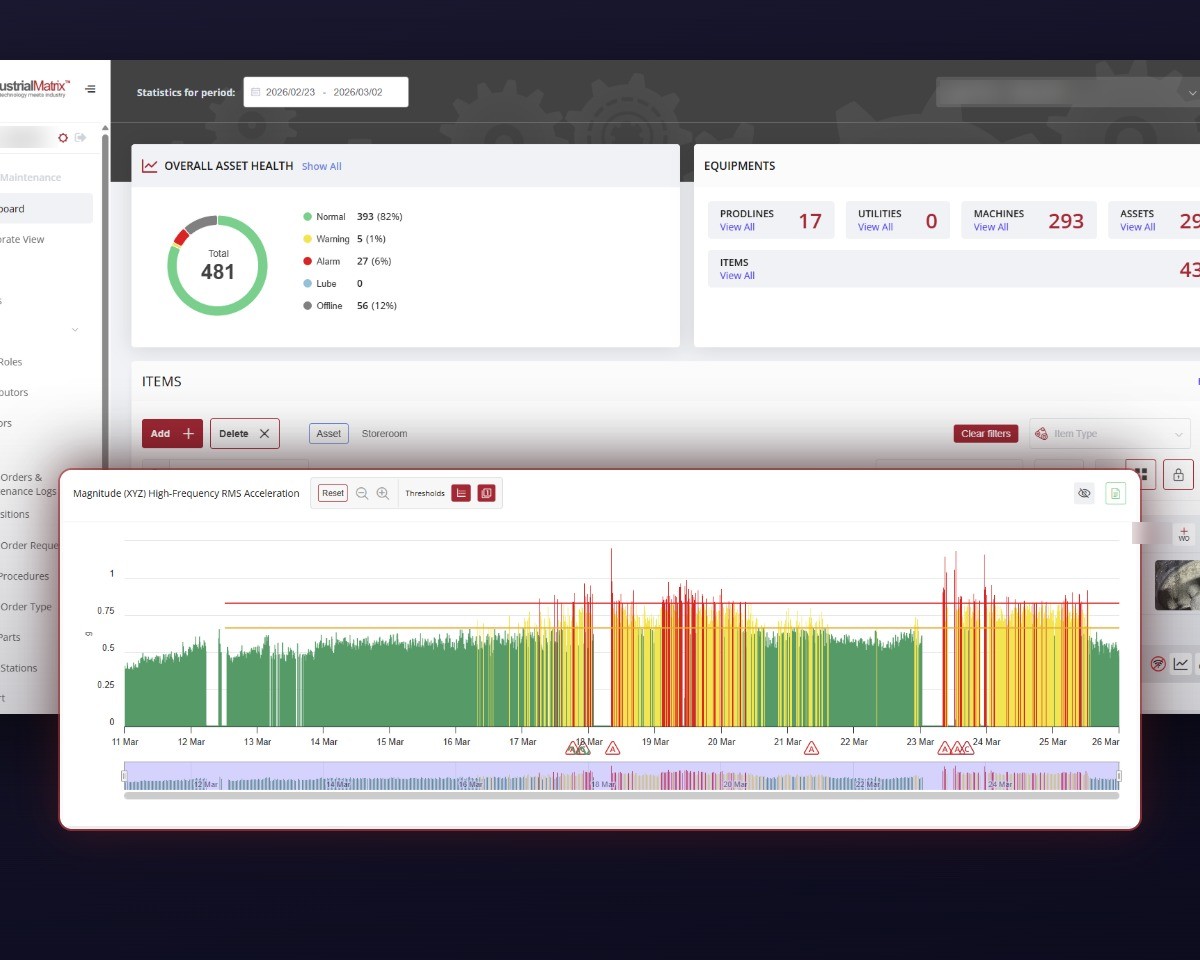
MatrixHub™ learns each asset's normal operating signature and ranks every deviation by what it would stop — the dough mixer above the utility fan.
03
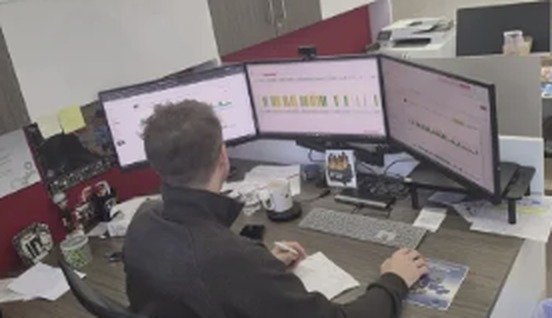
Our Customer Success team validates every flagged anomaly before it reaches you, so only confirmed findings reach your work queue.
04
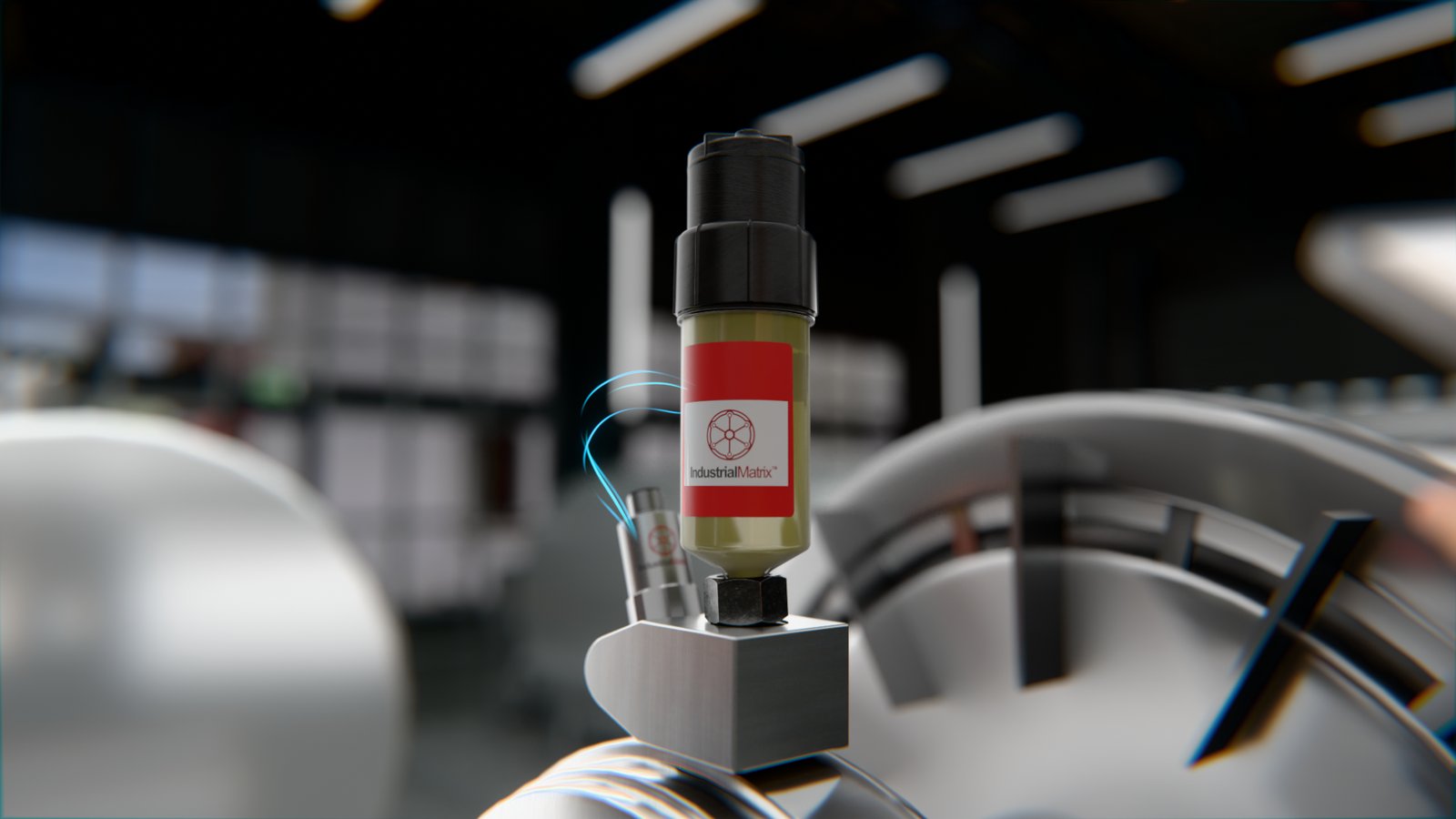
Lubrication faults are corrected autonomously by AI LubeMatrix™ on live ultrasound. Every other confirmed fault becomes a prioritized work order, reviewed in our biweekly CS meeting and tracked until solved.
Every bakery gets its own coverage plan from a site survey: the mixers, ovens and line-critical drives get full 4-in-1 UltraVibe™ monitoring, and the supporting equipment and washdown zones get VELO™ Series vibration and temperature sensors.
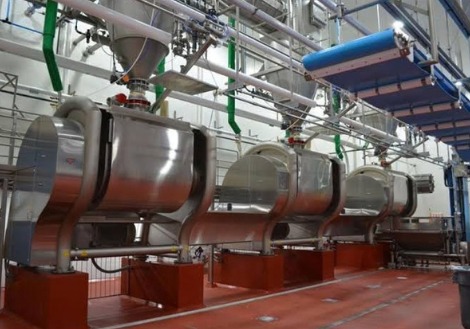
Spiral and horizontal mixers, kneaders, dividers and rounders — high-torque, stop-start assets where one bearing or mounting fault stops every batch behind it.
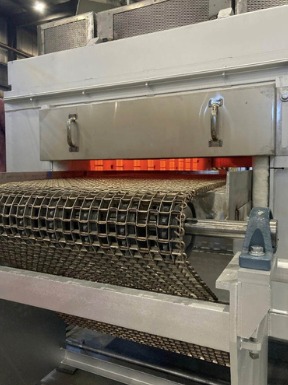
Tunnel oven and spiral oven conveyors, burner zones, circulation and exhaust fans, and proofer drives — hot, continuous-duty bearings where lubrication decides uptime.
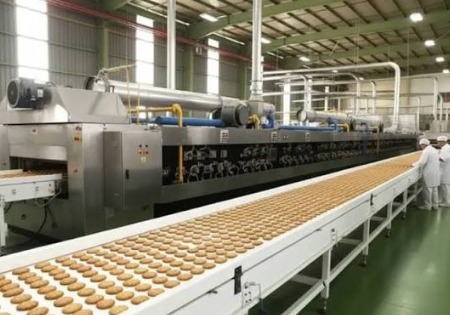
Spiral coolers and freezers, cooling conveyors, slicers and baggers — the end of the line, where one stop backs product up all the way to the oven.
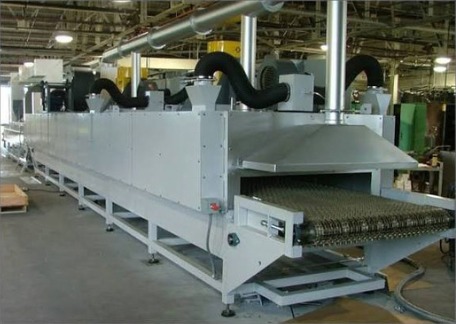
Flour-conveying and combustion blowers, thermal oxidizer fans on oven exhaust, and air and refrigeration compressors — shared utilities where one failure stops several lines at once.
Recommended configuration for an industrial bakery. Final coverage is set per asset during the site survey.
Line-critical rotating assets | UltraVibe™ 4-in-1 — ultrasound, HFE, vibration, temperature. Wired (M12, Modbus RTU over RS-485, 24 V DC), IP69K/IP67, −40 °C to +105 °C |
|---|---|
Broad bakery coverage & washdown zones | VELO™ Series temperature and vibration monitoring — VeloSense™ wireless (5+ year battery), VeloLink™ wired IP67 for tight mounts, VeloShield™ IP69K stainless steel, chemically resistant, for washdown and sanitation areas. −40 °C to +150 °C |
Hard-to-reach bearings | AI LubeMatrix™ — online condition-based lubrication triggered by the ultrasonic friction signature. NLGI 1–3, 24 V DC, IP66 / NEMA 4X |
Oven zone thermal | Non-contact infrared (IR) probes on tunnel oven burner zones — flame-zone surface temperature, heat loss and bake-profile drift |
Electrical | PULSE Series™ — current, infrared, airborne ultrasound and cabinet climate on motors, drives and panels |
Analytics & integration | MatrixHub™ — per-asset baselines, thresholds in 24–48 hours, Modbus, MQTT, OPC-UA and REST into your CMMS |
Predictive maintenance for industrial bakeries is the continuous monitoring of the assets that keep a bakery line running — mixers, kneaders, dividers, proofers, oven conveyors and fans, spiral coolers and freezers, and utilities such as blowers, thermal oxidizers and compressors — using ultrasound, vibration, temperature and electrical data. A developing fault is caught at its earliest stage and corrected on a planned schedule instead of stopping the line mid-batch.
Three published bakery cases put downtime at $4,000–$6,000 an hour on a roaster line, $5,000 an hour on a dough mixer, and $5,000–$8,000 an hour on a kneader — and early catches on those assets avoided approximately $8,300, $15,000–$20,000 and $15,000–$20,000 respectively. Bakery downtime cost depends on line rate and product, and is usually measured per hour of lost production.
Most unplanned downtime in a bakery starts in three places: mixer and kneader drives, where bearing wear and loose mountings build under high-torque stop-start duty; oven and proofer conveyors and fans, where heat breaks grease down; and spiral coolers, freezers and refrigeration compressors at the end of the line. The published bakery cases — a dough mixer motor, a kneader and a roaster fan — all fall into the first two.
At one commercial bakery, the closed-loop reliability ecosystem cut unplanned downtime 28% and delivered $940,000 in savings with a 5-month payback. At asset level, a dough mixer motor bearing fault was replaced in planned weekend downtime ($15,000–$20,000 avoided), loose hold-down bolts on a critical kneader were found five weeks ahead ($15,000–$20,000 avoided), and a roaster circulation fan was replaced about four weeks after the first alert with zero unplanned stoppage.
Start with the assets whose failure stops the line and that have no installed spare: dough mixers and kneaders, oven conveyor drives and bearings, oven circulation and exhaust fans, proofer and spiral drives, and the shared utilities behind them — pneumatic conveying and combustion blowers, thermal oxidizers on oven exhaust, and air and refrigeration compressors. Then extend coverage to dividers, coolers, slicers, packaging lines and the supporting equipment on VELO™ Series temperature and vibration monitoring.
Utilities are shared, so one failure stops more than one line. Pneumatic conveying blowers move flour and sugar to the mixers; when a blower bearing fails, mixing stops. Thermal oxidizers treat oven exhaust, and an oxidizer trip can force the ovens it serves to stop to stay within the plant's air permit. Air compressors feed pneumatic controls, depanners and packaging, and refrigeration compressors protect cooling and frozen product. In one published food case, monitoring detected compressor misalignment in time to prevent frozen product loss.
Dough mixer motors fail mostly through bearing degradation under high torque and stop-start loading, made worse by flour dust and heat. The fault builds for weeks before anyone hears it. In one published case, rising axial acceleration flagged drive-end bearing wear before any audible or thermal symptom, the motor was replaced during planned weekend downtime, and post-replacement vibration fell about 66%.
Ovens and proofers depend on fans and conveyors that run hot and continuously. Ultrasound detects rising friction on conveyor and fan bearings before vibration changes, vibration trending catches imbalance that disturbs airflow and bake consistency, and non-contact infrared probes profile each burner zone so flame-zone drift is caught before bake quality slips. In one published case, monitoring flagged imbalance and bearing wear on a roaster circulation fan about four weeks before replacement, avoided an unplanned stoppage, and improved the fan's energy efficiency 5–10%.
Ultrasonic greasing is online condition-based lubrication driven by the bearing's ultrasonic friction signature instead of a calendar. AI LubeMatrix™ reads live online ultrasound, dispenses grease only when friction shows the bearing needs it, at the dose it needs, then confirms friction returns to baseline. It uses the grease your plant already specifies (NLGI 1–3) and removes the over-greasing that puts excess lubricant near product. It is triggered by ultrasound alone — never by temperature or vibration.
Yes, provided the hardware is rated for daily high-pressure washdown. VeloShield™ is IP69K, stainless steel and chemically resistant, built for high-pressure washdown and sanitation chemistry; UltraVibe™ is sealed to IP69K/IP67; and VeloSense™ covers hard-to-cable areas wirelessly on a 5+ year battery. Sensors mount on bearing housings outside the product zone and stay in place through sanitation cycles.
Every reading, alert, validation and corrective action is timestamped and retained, so each asset's maintenance history is auditable rather than reconstructed from paper routes. Planned interventions replace emergency repairs in production areas, and condition-based lubrication cuts the over-greasing that creates contamination risk — both of which support HACCP, GMP and FSMA requirements and customer audit schemes such as SQF and BRCGS.
No. MatrixHub™ performs the analysis and the Industrial Matrix Customer Success team validates every finding with your team on a fixed biweekly cadence. Mixer, oven and cooler findings arrive already interpreted, with the corrective action defined and timed to your next sanitation window or changeover.
Predictive maintenance in a bakery identifies that an asset — a mixer motor, an oven conveyor, a spiral cooler drive — is degrading before it fails. Prescriptive maintenance goes further and specifies, or executes, the fix: predictive tells you an oven conveyor bearing is starving in the heat; prescriptive greases it. Industrial Matrix delivers both — validated findings become work orders timed to sanitation windows, and AI LubeMatrix™ executes lubrication corrections autonomously.
A bakery should look for sensing that covers the whole failure curve — ultrasound and HFE, not vibration alone; hardware rated for heat, flour dust and washdown; human validation so false alarms never reach the work queue; CMMS integration with an audit trail; and a path from alert to executed correction. Several vendors now combine vibration and ultrasound sensing. Industrial Matrix is the only company that combines a full condition monitoring sensor ecosystem with an autonomous condition-based lubrication actuator in one closed loop.
Sensors mount externally on bearing housings and gearboxes while the line keeps baking, and MatrixHub™ sets each asset's alarm thresholds autonomously within 24 to 48 hours. Most bakeries start on mixers, ovens and proofers, then extend to coolers, packaging and utilities — with no baseline study and no machine-by-machine manual tuning.
Our Vision
A bakery where no mixer fails mid-batch and no oven bearing runs dry. Every asset heard over the line, every lubrication fault corrected on measured friction, every finding validated and closed — the foundation of machine self-healing, one standard across every bakery.