
Every Saw Heard. Every Bearing Greased Right. The Mill Keeps Cutting.
Continuous Condition Monitoring for Saws, Infeed, Residuals and Kilns.

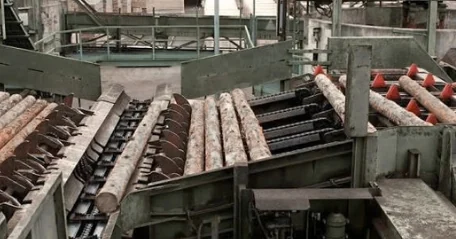
Predictive Maintenance for Sawmills & Lumber Mills
Every saw, conveyor and kiln fan — monitored in real time.
Continuous Condition Monitoring for Saws, Infeed, Residuals and Kilns.
Predictive maintenance for sawmills is continuous condition monitoring of the equipment that turns logs into lumber — debarkers, headrig band saws, edgers, trimmers and cutoff saws, chippers, conveyors and dry kiln fans — so a developing fault is corrected on a planned schedule instead of stopping the line. Coverage spans log decks and sorters, gang and arbor saws, hog and residual conveyors, planers and moulders, stackers, hydraulic power units, dust collection fans and air compressors, combining ultrasound, vibration, temperature and electrical monitoring with validated analysis and autonomous lubrication.
A sawmill runs as one flow from log deck to stacker: when a saw, the debarker or a residual conveyor stops, the line behind it stops too. Bearings are the usual failure point, and lubrication is the usual cause — in both directions. At one high-volume sawmill, repeated bearing failures on a merchandiser cutoff saw turned out to be caused by over-lubrication; vibration and temperature monitoring exposed the pattern, a 10-day grease pause cut vibration by about 52%, and the mill avoided $11,416 against downtime documented at $4,958 an hour.
UltraVibe™ captures ultrasound, HFE, vibration and temperature at every critical bearing, from saw arbors to debarker rotors. MatrixHub™ learns each asset's baseline and ranks every deviation by production risk. Industrial Matrix reliability experts validate each finding before it reaches your work queue, and AI LubeMatrix™ performs online condition-based lubrication — ultrasonic greasing — dosing only what measured friction calls for, which ends both the starved bearings and the over-greased ones that time-based routes create. From the first ultrasonic signal to verified corrective action, the closed-loop reliability ecosystem closes inside your mill.
Precision at the Core
01
Infeed, primary breakdown, edging, trimming and residuals run as one line. When a saw, the debarker or a chip conveyor stops, everything upstream backs up and everything downstream starves.
02
Time-based routes over-grease some bearings and starve others. In the published cutoff saw case, over-lubrication was the hidden cause of repeat failures — and condition monitoring proved it.
03
Sawdust, bark and constant impact wear bearings fast, and many grease points sit on elevated saw decks and conveyor galleries that routes skip. AI LubeMatrix™ doses them on measured friction.
04
A breakdown mid-shift idles the whole crew. Every validated finding becomes a prioritized work order, reviewed in our biweekly Customer Success meeting and scheduled into your next maintenance shift or down day.
$11,416
verified cost avoidance on one merchandiser cutoff saw
$4,958/hr
documented sawmill downtime cost in the same case
≈52%
drop in vibration once over-lubrication was identified and corrected
Failure Mode | Signature We Detect | Consequence If Missed |
|---|---|---|
Cutoff and trimmer saw bearing over-lubrication | Vibration rising sharply right after each grease cycle — the signature in the published case | Repeat bearing failures and downtime documented at $4,958 an hour |
Bandmill and headrig wheel bearing wear | HFE bearing-defect frequencies and a rising ultrasonic friction signature | Primary breakdown stops — the whole mill waits |
Saw arbor imbalance and misalignment | Elevated vibration at running speed and phase changes on gang, edger and trimmer arbors | Poor cut quality, saw deviation and arbor bearing damage |
Debarker rotor and drive wear | HFE and vibration on rotor bearings and gearboxes | Infeed stops and logs back up on the deck |
Log deck, sorter and infeed chain drive wear | Gear-mesh sidebands and HFE on chain drive gearboxes | Infeed slows or stops, sorter bins starve |
Chipper and hog bearing faults and imbalance | Vibration and temperature trends on chipper and hog drives | Residuals back up and the saws have to stop |
Chip, sawdust and residual conveyor bearing lubrication breakdown | Rising ultrasonic friction signature — before vibration changes | Conveyor stop that backs up the residual system |
Dry kiln fan and line shaft bearing failure | Vibration and temperature drift on fan motors, bearings and line shafts in heat and humidity | Uneven drying, degrade and lost kiln capacity |
Planer and moulder spindle bearing wear | HFE and vibration on spindle and head bearings | Surface defects, planer mill stops |
Hydraulic power unit, dust collection fan and air compressor faults | Vibration, temperature and current drift (PULSE Series™) on pumps, fans and motors | Saw positioning faults, dust build-up and lost plant air |
Sense → Analyze → Validate → Act
01
UltraVibe™ 4-in-1 sensors on saw arbors, debarker rotors, chippers and line-critical conveyors capture ultrasound, HFE, vibration and temperature at the bearing — through sawdust, bark and constant impact.
02
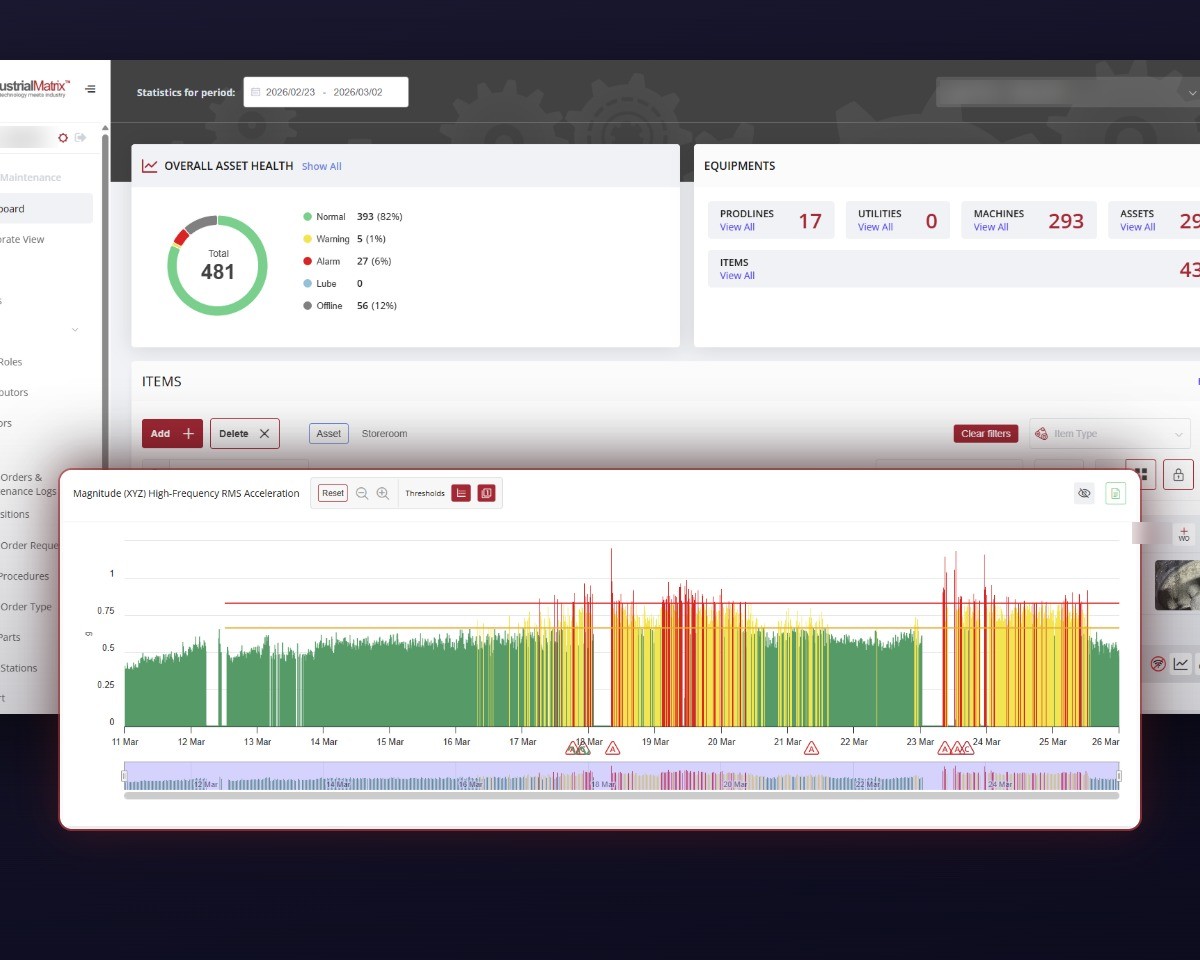
MatrixHub™ learns each asset's normal operating signature and ranks every deviation by what it would stop — the bandmill above the dust collection fan.

03
Our Customer Success team validates every flagged anomaly before it reaches you, so only confirmed findings reach your work queue.
04
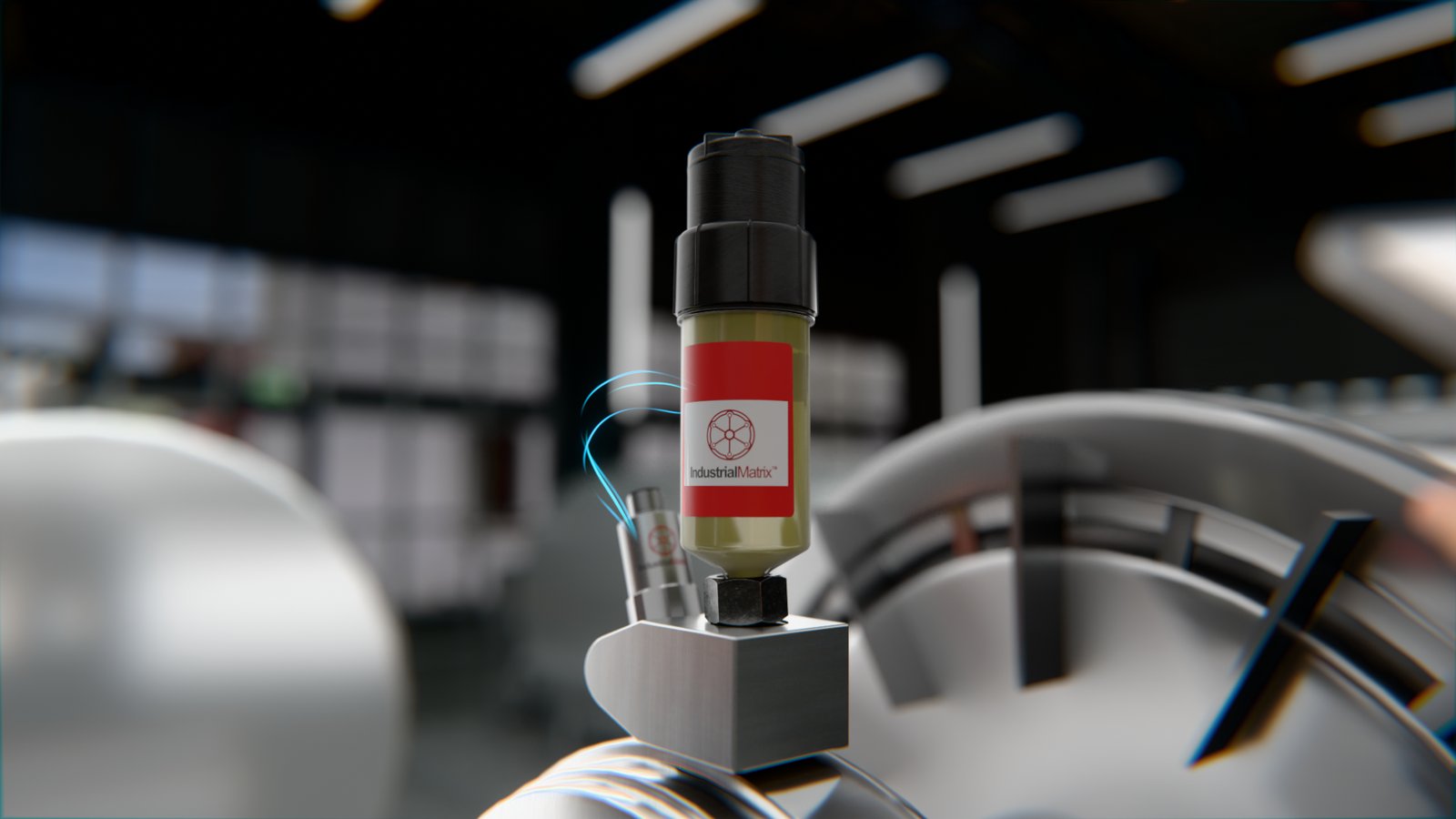
Lubrication faults are corrected autonomously by AI LubeMatrix™ on live ultrasound. Every other confirmed fault becomes a prioritized work order, reviewed in our biweekly CS meeting and tracked until solved.
Every mill gets its own coverage plan from a site survey: the saws, debarker, chippers and line-critical conveyors get full 4-in-1 UltraVibe™ monitoring, and the supporting equipment across the rest of the mill gets VELO™ Series vibration and temperature sensors.
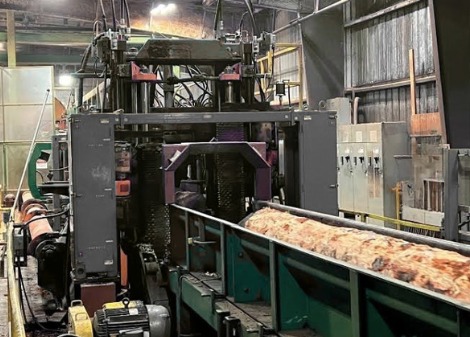
Headrig and bandmill wheel bearings and carriage drives, gang and edger arbors, and merchandiser cutoff saw bearings and motors — high-speed, high-impact cutting where one bearing stops the line.
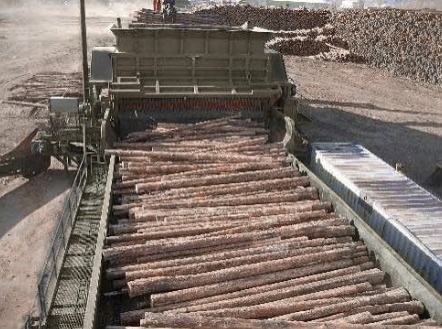
Debarker rotors and drives, log deck and infeed chain drives and gearboxes, and log sorter and merchandiser conveyor drives — the infeed that sets the pace for the whole mill.
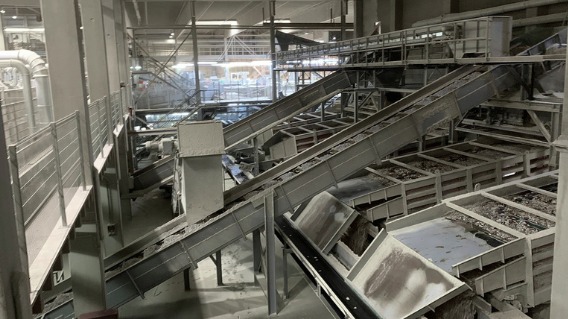
Chipper and hog drives, chip, sawdust and residual conveyor bearings and pulleys, and blower drives — the residual system that backs up the saws when it stops.
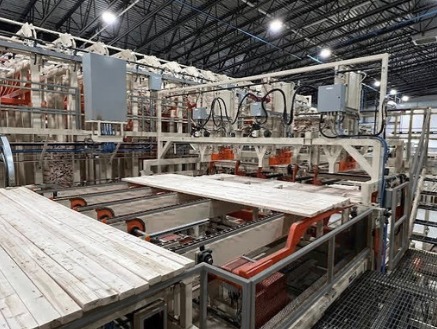
Trimmer saw arbors, green chain and lug transfer drives, bin sorter drives, and stacker and stick placer drives — the back end where green lumber boards are trimmed, sorted and packaged.
Recommended configuration for a sawmill. Final coverage is set per asset during the site survey.
Saws, debarkers and chippers | UltraVibe™ 4-in-1 — ultrasound, HFE, vibration, temperature. Wired (M12, Modbus RTU over RS-485, 24 V DC), IP69K/IP67, −40 °C to +105 °C |
|---|---|
Broad mill coverage | VELO™ Series temperature and vibration monitoring — VeloSense™ wireless (5+ year battery) for kiln line shafts, conveyor galleries and remote drives, VeloLink™ wired IP67 for tight mounts. −40 °C to +150 °C |
Elevated and hard-to-reach bearings | AI LubeMatrix™ — online condition-based lubrication triggered by the ultrasonic friction signature, so bearings are neither starved nor over-greased. NLGI 1–3, 24 V DC, IP66 / NEMA 4X |
Electrical | PULSE Series™ — current, infrared, airborne ultrasound and cabinet climate on saw, chipper and hydraulic unit drives and MCCs |
Remote sites | Edge analytics make detection and alarm decisions on site; the cloud layer synchronizes when connectivity returns |
Analytics & integration | MatrixHub™ — per-asset baselines, thresholds in 24–48 hours, Modbus, MQTT, OPC-UA and REST into your PLC, SCADA and CMMS |
Predictive maintenance for sawmills is the continuous monitoring of the assets that turn logs into lumber — debarkers, headrigs and bandmills, gang, edger and trimmer saws, merchandiser cutoff saws, chippers, conveyors, dry kiln fans and planers — using ultrasound, vibration, temperature and electrical data. A developing fault is caught early and corrected on a planned schedule instead of causing unplanned downtime on the line.
In one published high-volume sawmill case, downtime was documented at $4,958 an hour; preventing two hours of it and one $1,500 bearing replacement on a merchandiser cutoff saw avoided $11,416. The cost of any stop depends on where it happens — a saw, the debarker or a residual conveyor can each idle the whole line.
Most unplanned downtime in a sawmill starts with bearings on the saws, the debarker and the chippers — and lubrication is the most common root cause, in both directions. Starved bearings fail from friction and heat; over-greased bearings fail from pressure and churning. Chain drive and gearbox wear on log decks and sorters, residual conveyor stops and dry kiln fan failures make up most of the rest.
At a high-volume sawmill, vibration and temperature sensors on a merchandiser cutoff saw showed vibration rising sharply right after every lubrication cycle. Industrial Matrix specialists confirmed the cause — over-lubrication — and a 10-day grease pause cut vibration by about 52%. The mill moved to condition-based lubrication, ended the repeat failures, avoided $11,416, and expanded monitoring to conveyors, debarkers and log sorters.
Yes. Too much grease raises internal pressure, churns and overheats the lubricant and pushes past seals — and it is easy to miss, because routes record that grease was applied, not whether it was needed. In the published sawmill case, over-lubrication was the hidden cause of repeat cutoff saw bearing failures. AI LubeMatrix™ prevents it by dosing only when the ultrasonic friction signature shows a bearing needs grease.
Start with the assets whose failure stops the line and that have no installed spare: bandmill and headrig wheel bearings, debarker rotors, gang, edger and trimmer arbors, merchandiser cutoff saws and chippers. Then cover log deck and sorter chain drives, chip and residual conveyors, dry kiln fans and line shafts, planers, hydraulic power units and dust collection fans.
On bandmills, gang saws, edgers and trimmers, sensors on the wheel and arbor bearings track vibration at running speed for imbalance and misalignment, HFE for bearing defects, and ultrasound for friction. Imbalance and misalignment show up as saw deviation and poor cut quality before they show up as failure, so a trend on the arbor is a quality warning as well as a reliability one.
Dry kiln fans and line shafts run hot and humid for long cycles, often on kiln roofs that are awkward to reach. The VELO™ Series covers −40 °C to +150 °C, and VeloSense™ is wireless on a 5+ year battery, so fan motors, bearings and line shaft bearings can be monitored without cable runs. Vibration and temperature trends catch failing bearings before a fan stops and drying goes uneven.
Yes, provided the hardware is sealed for abrasive dust and built for impact. UltraVibe™ is wired and sealed to IP69K/IP67, operating from −40 °C to +105 °C, and VeloShield™ adds IP69K stainless steel where debris and washdown are constant. Sensors mount on bearing housings and keep reporting through the sawdust, bark and vibration that wear out portable route checks.
Ultrasonic greasing is online condition-based lubrication driven by the bearing's ultrasonic friction signature instead of a calendar. AI LubeMatrix™ reads live online ultrasound and dispenses grease only when friction shows the bearing needs it, at the dose it needs, then confirms friction returns to baseline. In a sawmill that ends both the starved bearings on skipped routes and the over-greased ones behind repeat failures. It is triggered by ultrasound alone, never by temperature or vibration.
Yes. Edge analytics make detection and alarm decisions on site, so faults are still caught when the connection is intermittent or down, and the cloud layer synchronizes when it returns. Wireless VeloSense™ sensors reduce cable runs across log yards, conveyor galleries and kiln roofs, which matters at remote mill sites with lean crews.
No. MatrixHub™ performs the analysis and the Industrial Matrix Customer Success team validates every finding with your team on a fixed biweekly cadence. Saw, debarker and kiln fan findings arrive already interpreted, with the corrective action defined and timed to your next maintenance shift or down day.
Predictive maintenance in a sawmill identifies that an asset — a bandmill wheel bearing, a debarker rotor, a kiln fan — is degrading before it fails. Prescriptive maintenance goes further and specifies, or executes, the fix: predictive tells you a conveyor bearing on an elevated gallery is starving; prescriptive greases it. Industrial Matrix delivers both — validated findings become work orders timed to down days, and AI LubeMatrix™ executes lubrication corrections autonomously.
A sawmill should look for sensing that covers the whole failure curve — ultrasound and HFE, not vibration alone; hardware sealed for sawdust and impact; wireless options for kiln roofs and remote drives; edge processing for poor connectivity; human validation so false alarms never reach the work queue; and a path from alert to executed correction. Several vendors now combine vibration and ultrasound sensing. Industrial Matrix is the only company that combines a full condition monitoring sensor ecosystem with an autonomous condition-based lubrication actuator in one closed loop.
Sensors mount externally on bearing housings while the mill keeps cutting, and MatrixHub™ sets each asset's alarm thresholds autonomously within 24 to 48 hours. Most mills start on the saws, debarker and chippers, then extend to conveyors, kilns and the planer mill — with no baseline study and no machine-by-machine manual tuning.
Our Vision
A sawmill where no saw bearing fails by surprise and no bearing is starved or over-greased. Every bearing heard through the sawdust, every lubrication fault corrected on measured friction, every finding validated and closed — the foundation of machine self-healing, one standard across every mill.